
India Faces Decline of Effective Opposition Following West Bengal Election Defeat
News Summary
Editorial Review Completed.
- The Trinamool Congress, led by Mamata Banerjee, was unable to secure even 100 seats in the West Bengal Legislative Assembly elections, while the BJP emerged victorious.
- Mamata Banerjee’s defeat signals a weakening of opposition parties in India and a boost to the BJP’s morale.
- A lack of unity and weak strategies among the opposition parties have enabled the BJP to form governments in many states.
April 22, Kathmandu – The results of the West Bengal Legislative Assembly election have dealt a severe blow to Mamata Banerjee’s party, the Trinamool Congress (TMC). Previously holding 215 seats, the party failed to win even 100 seats this time.
Even more significant is that the Bharatiya Janata Party (BJP), which Mamata Banerjee and her party had vigorously opposed, emerged victorious in West Bengal.
Mamata Banerjee was seen as a prominent figure among the opposition against the BJP-led central government, with support from leaders such as Akhilesh Yadav, former Chief Minister of Uttar Pradesh and leader of the Samajwadi Party, and Tejashwi Yadav of the Rashtriya Janata Dal (RJD) from Bihar.
However, despite backing from many opposition leaders, Mamata Banerjee failed to retain power. This defeat is not only a major setback for opposition parties but also indicates a further weakening of their influence in Indian national politics.
Mamata Banerjee was considered a key face of the India bloc formed against the Modi government and the BJP for the 2024 Lok Sabha elections. She advised leaders such as Lalu Prasad Yadav and Nitish Kumar to convene the opposition alliance’s first meeting in Patna.
Following her advice, the India bloc held its inaugural meeting in Patna. This report examines the impact of Mamata Banerjee’s assembly election defeat on her political stature, and the broader consequences for the national opposition and political future.
‘Opposition Has Weakened’
The Trinamool Congress is the third largest opposition party nationally. In 2024, among opposition parties, only the Congress (99 seats) and the Samajwadi Party (37 seats) won more seats.
The TMC secured 29 out of 42 parliamentary constituencies in West Bengal. Senior journalist Rashid Kidwai states, ‘With this victory, the BJP will now strive to dominate all 42 seats in West Bengal. Mamata Banerjee is a significant leader, but her party’s defeat has weakened the opposition and strengthened the BJP.’
He added, ‘It is clear the opposition parties lack unity. They saw Mamata Banerjee only as a political headache. These parties differ ideologically, whereas the BJP’s right-wing politics faces no serious alternative.’
In terms of opposition’s performance, while the Congress-led UDF coalition regained power in Kerala, it suffered defeat in Assam. Similarly, DMK leader M.K. Stalin, who opposed the BJP in Tamil Nadu, also lost. Senior journalist Neerja Chaudhary comments, ‘Overall, the opposition is weak. All major opposition leaders have been defeated. This may lead to internal conflicts and controversies among them, affecting figures like Mamata Banerjee and M.K. Stalin.’
BJP leaders accused Mamata Banerjee and her party during West Bengal campaigning of sheltering Bangladeshi citizens and corruption. In Tamil Nadu, BJP and DMK have clashed over issues related to Hindi language and Sanatan Dharma.
Politics Without Opposition
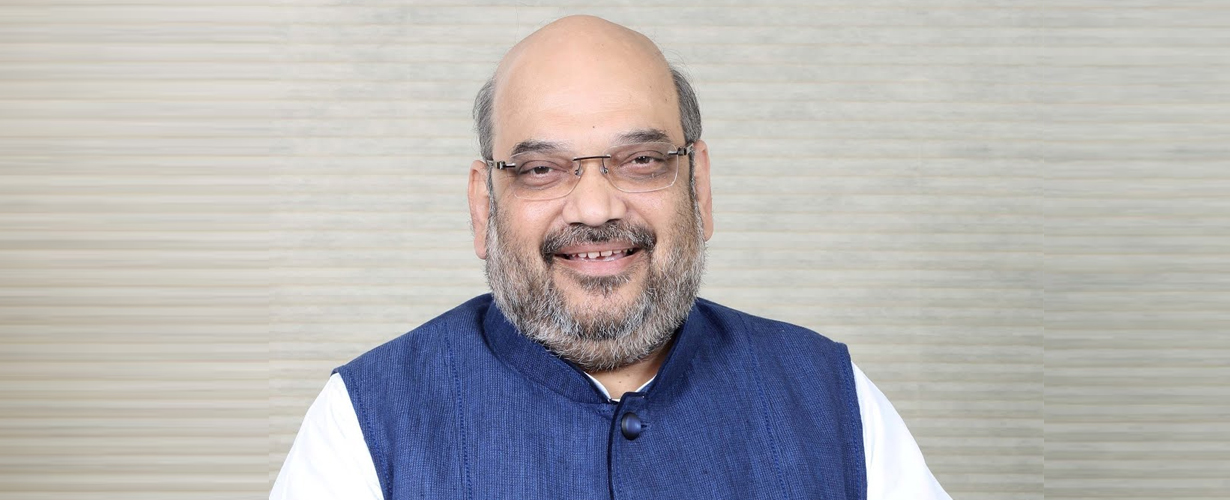
After losing power in many states in recent years, opposition parties have weakened in national politics. The BJP has been back in power for nearly three decades in Delhi. Recently, the BJP made Samrat Chaudhary the Chief Minister in Bihar for the first time.
The BJP currently governs many states including Uttarakhand, Uttar Pradesh, Delhi, Haryana, Rajasthan, Gujarat, Maharashtra, Goa, Madhya Pradesh, Chhattisgarh, Odisha, Arunachal Pradesh, Tripura, and Assam, either directly or in coalition governments maintaining majority support.
The victory in West Bengal opens new opportunities for the BJP, allowing it to advance with high morale even in states previously considered difficult for the party to govern.
Former Director and political analyst D.M. Divakar of the AN Sinha Institute of Social Studies (Patna) says, ‘The BJP desires politics without a substantial opposition. This victory will boost their morale. The opposition must rethink its weaknesses after this defeat. Parliamentary politics is opportunistic, so everyone looks out for their own interests.’
Divakar adds, ‘Opposition and regional parties are fragmented. The BJP’s win in West Bengal could be replicated in Uttar Pradesh. In politics, only small opposition parties remain against the BJP, which is unfortunate for democracy.’
Rashid Kidwai notes, ‘In West Bengal, left-wing parties, AIMIM, Congress, and TMC divided the secular vote, but the BJP’s majority politics kept their votes consolidated.’
He further states, ‘Another problem for the opposition is that their unity or strategy often remains only on paper. If Congress had agreed on an alliance with the winning party in Tamil Nadu, it would have been beneficial, but P. Chidambaram’s refusal left the Congress isolated.’
Path Forward for the Opposition
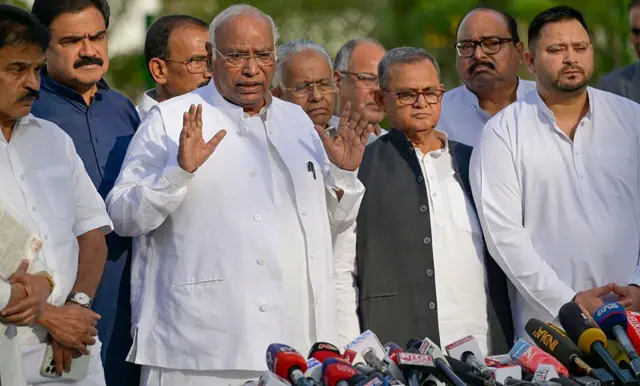
On June 23, 2023, opposition parties held a meeting in Patna to face the BJP in the 2024 Lok Sabha elections. The meeting included leaders such as Bihar’s then Chief Minister Nitish Kumar, Lalu Prasad Yadav of RJD, Congress President Mallikarjun Kharge, Rahul Gandhi, Sharad Pawar, Uddhav Thackeray, Hemant Soren, Akhilesh Yadav, Mamata Banerjee, Arvind Kejriwal, Farooq Abdullah, and Mehbooba Mufti, among others.
However, just a few months later, Nitish Kumar broke away from the opposition alliance and allied with the BJP, marking a significant blow to the opposition coalition.
Since then, the remaining opposition parties have failed to present a united front for the Lok Sabha elections. Splits emerged from Delhi to Punjab, and West Bengal to Bihar.
Divakar states, ‘The loss in West Bengal will demoralize the opposition, but it would be good if they remain active and do not become inactive after the defeat.’
He adds, ‘In Mamata Banerjee’s case, there was an anti-incumbency wave and public sentiment, but the BJP’s aggression led to her defeat. The Election Commission’s role is to increase voter participation — a healthy aspect of democracy — but that is declining.’
A major challenge facing the opposition is that when Rahul Gandhi and Tejashwi Yadav were holding ‘Vote Rights Rallies’ in Bihar, Mamata Banerjee did not participate. During the occurrences similar to the SIR incidents in West Bengal, opposition parties did not offer her full support.
Neerja Chaudhary opines, ‘Following Mamata Banerjee’s defeat, there is only one way forward for the opposition — accept Congress leadership and for Congress to show generosity. If this happens, the opposition can move forward. This phase is important not just for opposition parties but also for the BJP to see what strategy the opposition forms next.’
Rashid Kidwai comments, ‘When the BJP loses, it immediately prepares for the next battle, but when the opposition loses, it becomes indifferent, as seen after Bihar’s defeat when the opposition remained passive and disconnected from public issues.’
(Content contributed by Chandan Kumar Jazwade for BBC Hindi)