
From Grass Gathering to Welcoming Tourists: The Prosperity of Ramkot
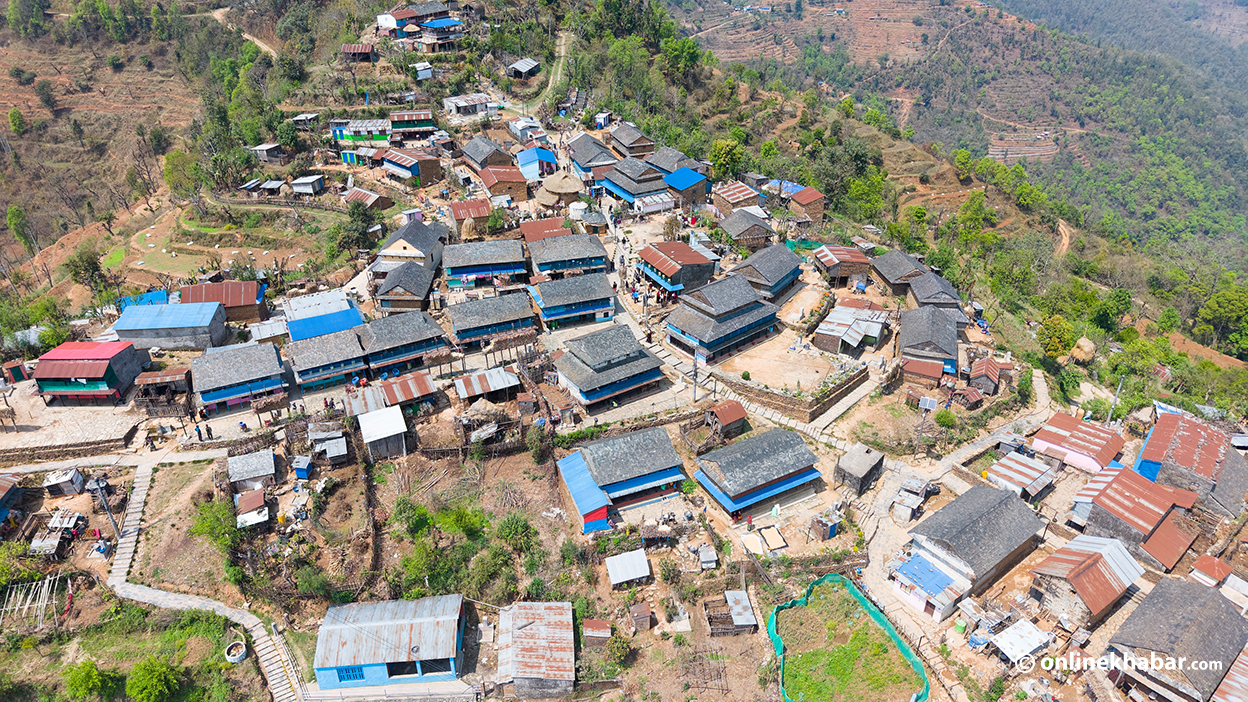
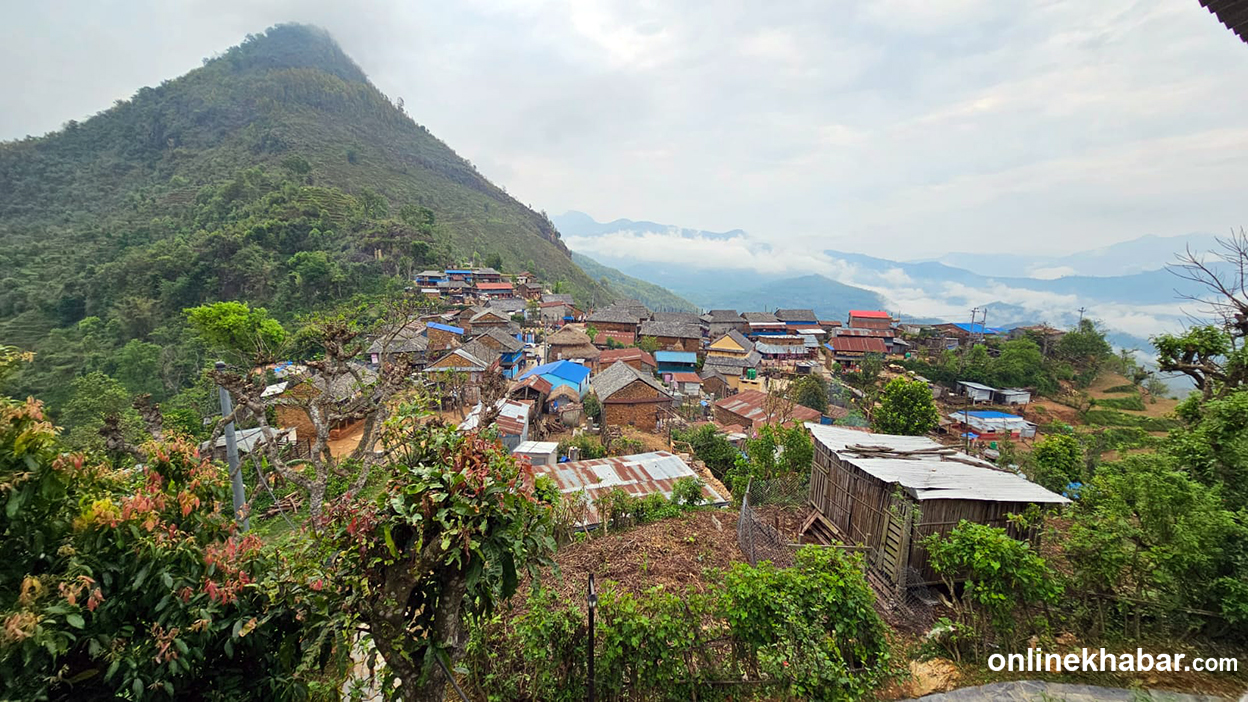
April 11, Tanahun – Around a decade ago, Ramkot village in Bandipur-3, Tanahun, faced daily challenges such as grass gathering, household animal waste littering the narrow streets, unpleasant odors, and no electricity, resulting in general unawareness. The situation of Ramkot and its residents was very different at that time. However, over the past ten years, Ramkot has transformed itself, leaving behind its difficult past to embark on a path of prosperity.
Home to a dense Magar community with stone-covered houses, Ramkot’s identity shifted dramatically after the introduction of homestays in 2018 (2075 BS). The increase in income through homestays has enabled locals to become more self-reliant.
Situated near the stunning northern snow-capped mountains, Ramkot Chuli (Dankne Hill) has witnessed firsthand the remarkable change in the villagers’ hardships and lifestyle.
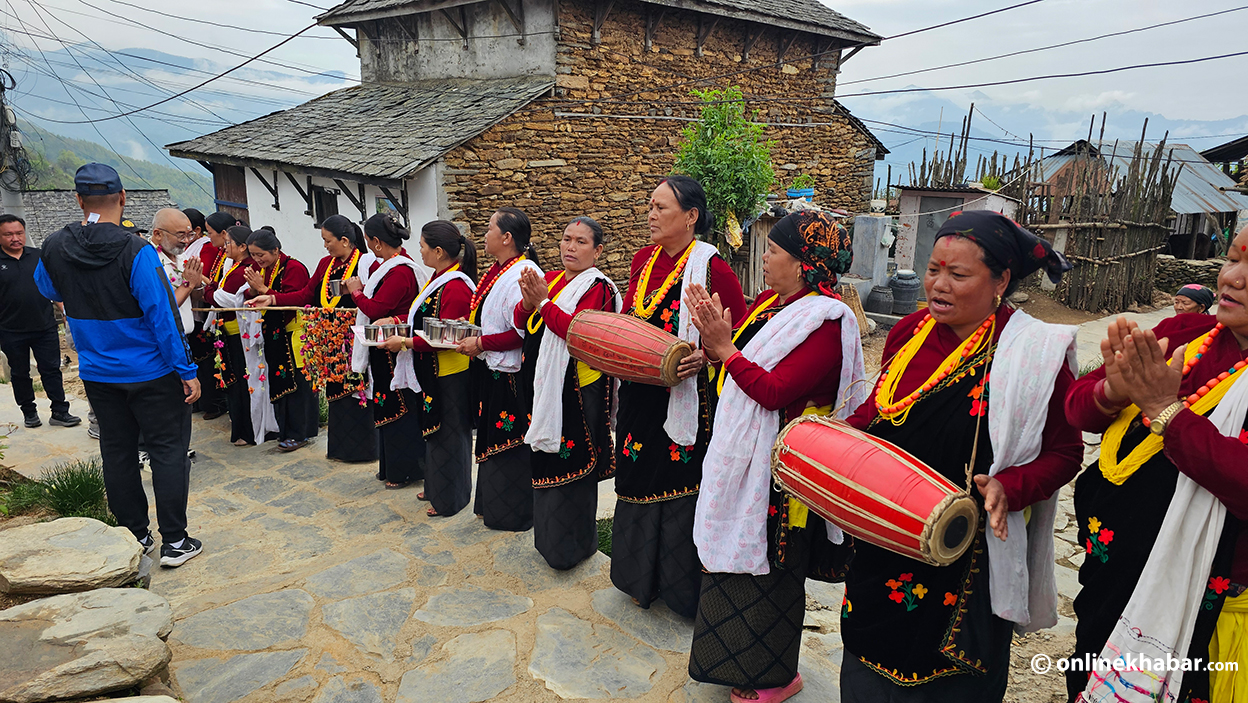
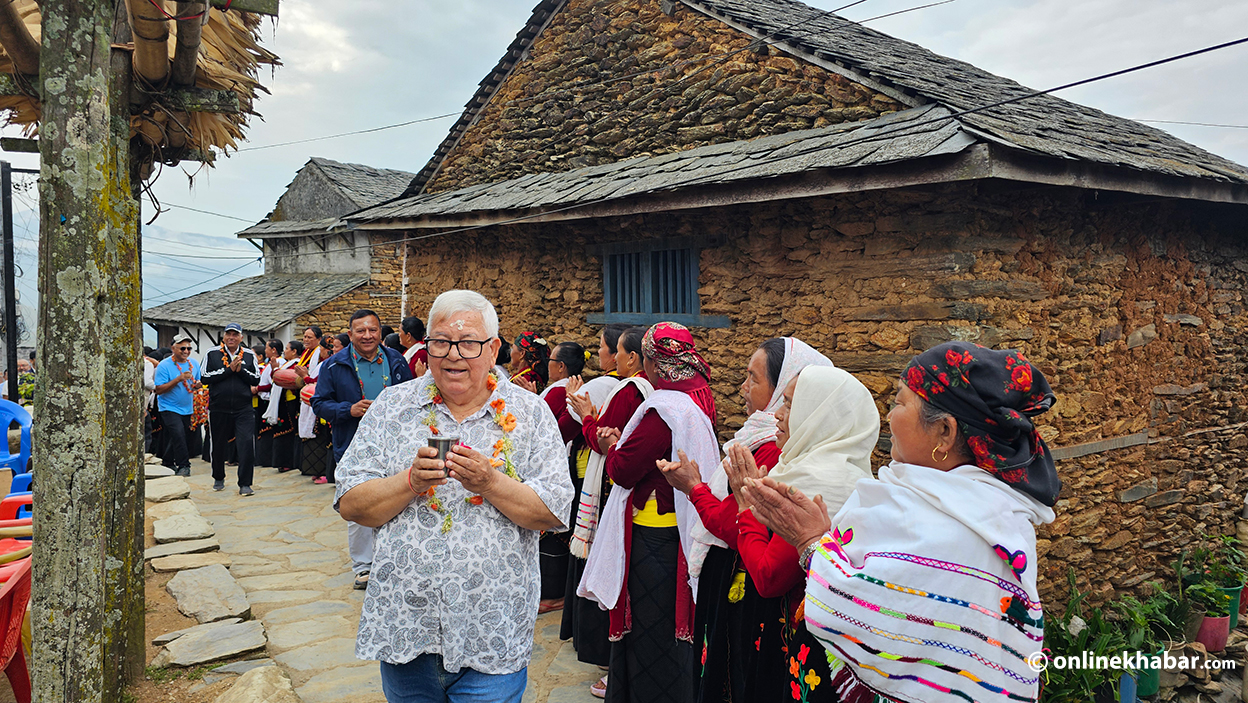
Women who were previously busy with grass cutting and farming are now adorned in traditional Magar attire, actively welcoming and hosting tourists with the customary “Jhorle” greeting. Visitors climbing to Ramkot receive a white tika as a mark of hospitality.
Garlands of flowers hang around their necks, along with a steel glass filled with “Sagoon” (local wine). Tourists savor this by dipping their fingers in the “Gundri” (local wooden plate). As evening approaches, lively folk songs such as Jhyaure, Kaura, and Chutka, accompanied by music and dance, create a festive atmosphere that enlivens the community.
During dinner, local women warmly serve guests traditional organic meals such as millet and buckwheat porridge, pickled vegetables, and local chicken curry, with men assisting in hosting duties. Guests dine together in one household but sleep separately in different houses.
In the morning, tourists enjoy millet-based Sel Roti, vegetable curry, pickles, and tea. Upon departure, they are again presented with white tika and flower garlands as tokens of farewell.
Ramkot receives 10 to 15 tourists daily, with larger groups arriving during holidays. On average, 3-4 foreign tourists visit each day, most of whom come in the morning and return by evening.
Out of 95 households, 48 are members of the homestay program, though only 15 currently operate homestays. Ramkot can accommodate up to 30 guests at once, charging NPR 1,200 per person per night, with an additional NPR 3,000 for cultural programs.
Local residents credit the influx of tourists with increasing household income. Previously, running a household was difficult and women depended heavily on men’s earnings, but now, women are not only enjoying hosting tourists but also earning income and becoming self-sufficient.
44-year-old Krishnamaya Thapa reflects on the difficult times of the past and praises the current progress. “We could barely speak well and were afraid of strangers; those were tough days,” she said. “But now we are self-reliant, and life feels brighter.”
Ramkot’s streets are now stone-paved and clean. Maize drying racks in the yards and stone fences add charm to the village. Alongside homestays, locals raise chickens, goats, and pigs, cultivate vegetables, and produce local alcoholic beverages for income.
Regular income has made it easier to solve minor financial problems, say local women.
The homestay initiative has also encouraged women to develop saving habits. The preservation of Magar culture combined with increased local income generation has surprised and delighted all involved.
Youth Envision Their Future Within the Village
Where youth used to migrate abroad for work, they are now opting to build their future within the village. Among them is Nirakaji Ale, president of Ramkot Community Homestay.
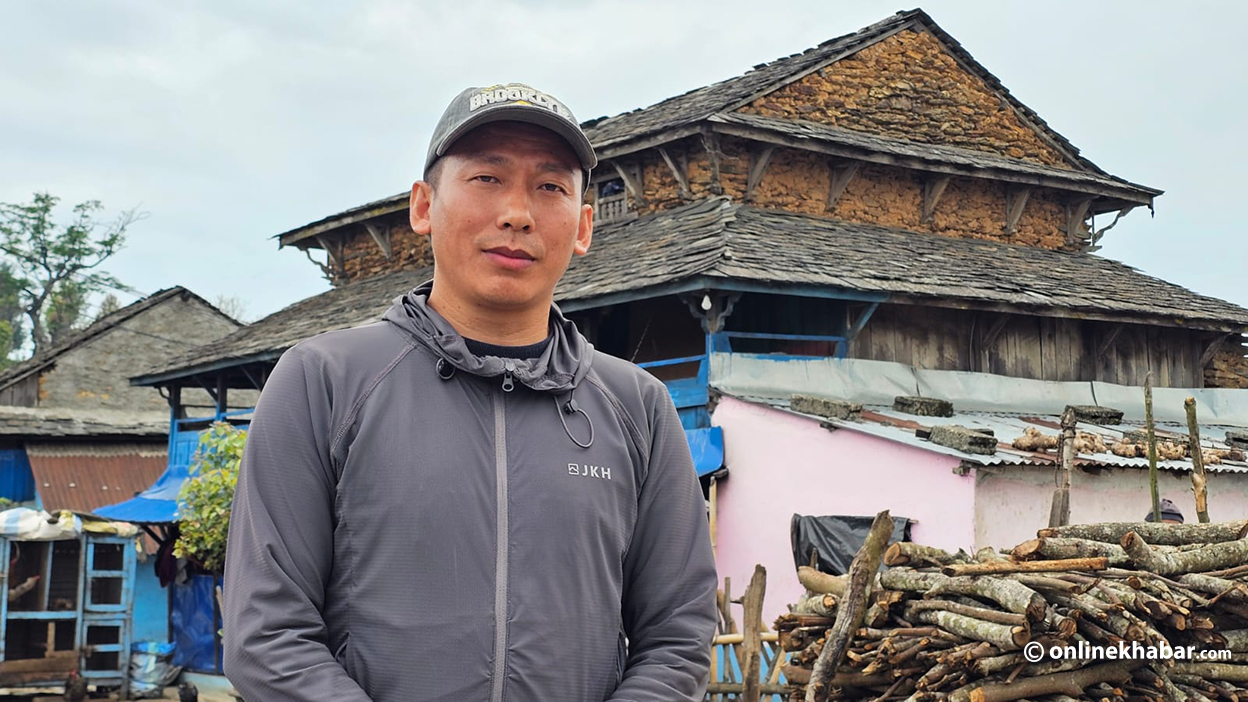
Having returned from Malaysia, Ale actively promotes homestay development, marketing, orientation, and public awareness. “Some youths are determined to do something here. Without the homestay, Ramkot would have faced the fate of many other villages,” he said.
Previously, without rural tourism, most youths sought foreign employment. Now, the majority remain in the village.
Homestay secretary Savitri Thapa notes that women previously occupied with traditional agriculture and grass gathering are now engaged in income generation and skill development programs. Running a homestay has significantly transformed lifestyles and increased self-employment.
How to Reach Ramkot?
Located 8 kilometers west of Bandipur marketplace, Ramkot is a cultural hub of the Magar community. At an altitude of approximately 1,000 meters above sea level, the panoramic views of the Himalayan range are a major draw for tourists.
Vast Sukhaura farmland and centuries-old Magar villages are becoming attractive destinations for visitors.
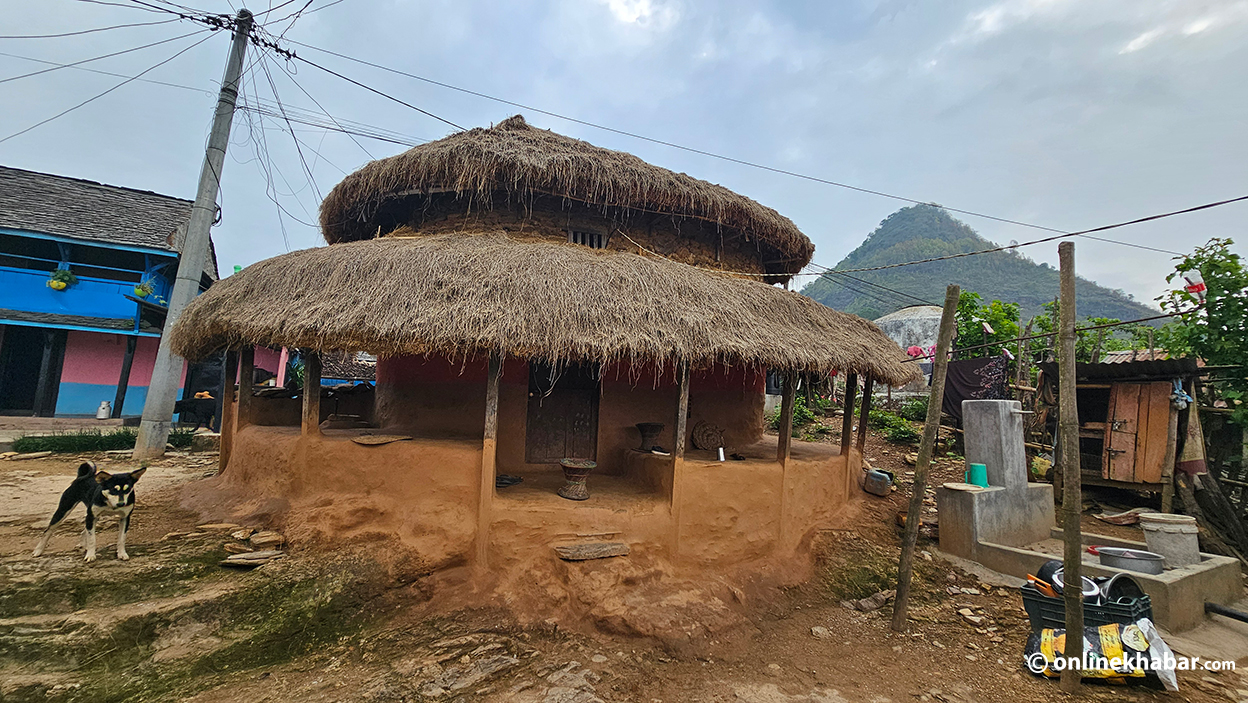
Ramkot still preserves a nearly century-old “rotating house.”
The village is accessible by traveling 5.5 kilometers via Muchhuk from Bandipur, or 8 kilometers via Seratar, or by crossing 7 kilometers from the Prithvi Highway’s Chhirka point.
Nirakaji Ale, president of Ramkot Community Homestay, highlighted that both domestic and international tourists are drawn by the warm local hospitality.
The Village Safari launched in Bandipur has also contributed to increased tourist arrivals in Ramkot. Initiated by Basanta Paudel in January, the safari exposes travelers to various villages, raising their profiles.
Sujan Pokharel from Bharatpur, Chitwan, shared his delight after his first visit to Ramkot, praising the hospitality and cuisine. Another visitor, Bijyan Paudel, expressed the need to return to study Magar customs, arts, and community dynamics.
Challenges and Needs Remain
Water scarcity continues to be a major issue in Ramkot. Although eight local springs serve the community collectively, delivering water to individual households remains a challenge.
Due to water shortages, agricultural outputs and livestock rearing have not met expectations.
The road connecting Bandipur to Ramkot remains unpaved, posing difficulties for tourist access. President Ale emphasized that paving the road would further increase visitor numbers.
There is also a need to establish a cultural house and museum. Many households face financial difficulties operating homestays. Efforts are underway to incorporate production-based activities and improve waste management infrastructure in the village.
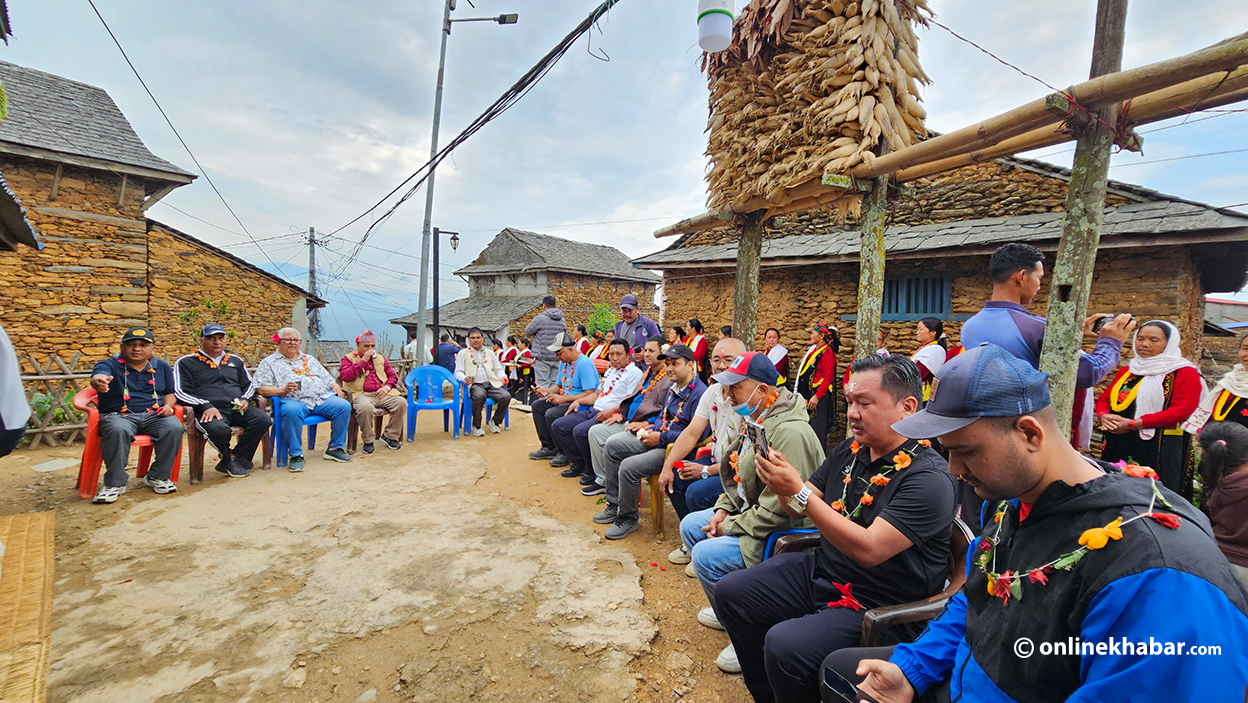
President Ale outlined plans to build infrastructure capacity to accommodate 200 guests overnight within the next year. There is also an ambition to revive traditional music and dance, including the “Thado Bhaka” and “Maruni” dances, to preserve the village’s heritage.
“There is little out-migration; most people remain here,” he said. “Since income opportunities exist locally, we strive to prevent villagers from leaving.”
Without homestays, many would have left the village. Now, the place is vibrant and attractive; yet, more work remains in promoting Ramkot nationally and internationally, especially through social media.
Discussions are ongoing to encourage youths to invest their foreign earnings back into the village. Efforts are being made to finalize routes connecting the Prithvi Highway Chhirka point through Ramkot to Bandipur, and from Bandipur to Ramkot, facilitating easier travel for out-of-town visitors.
Infrastructure Development and Strain
The Gandaki Province government and Bandipur Rural Municipality have supported Ramkot with homestay-related infrastructure development, including training programs, stone paving, water supply, and electricity installation.
Surendra Bahadur Thapa, chairperson of Bandipur Rural Municipality, noted that stone paving in the streets was completed in 2024 (2081 BS), with ongoing projects to install stonework on all houses and supply water to the village. Mattress and bedding materials have also been purchased for distribution.
The municipality is preparing homestay circuits including Bandipur and Byas municipality locations, promoting overnight stays in Ramkot.
The rural municipality also supports promotional activities such as videography and cycling tours. The road from Seratar is scheduled for 700 meters of paving this year, with requests submitted to provincial and central governments for the remaining sections.