
Unnatural Surge in Walnut Imports: Domestic Consumption or Smuggling?
News Summary
- In Nepal’s fiscal year 2082/83, both the quantity and value of walnut imports more than doubled compared to the previous year.
- According to the Customs Department, 9.4 million kilograms of walnuts valued at NPR 353 crore were imported, a 132% increase from the prior year.
- Reports indicate that due to customs duty differences between Nepal and India, walnuts imported from China are being smuggled illegally into India.
August 8, Kathmandu – Recently, there has been a significant surge in walnut imports to Nepal. In fiscal year 2082/83, both the volume and value of walnut imports increased by more than double compared to fiscal year 2081/82, confirmed by official Customs Department data.
According to the Customs Department, traders imported walnuts worth NPR 353 crore 66 lakhs 92 thousand, totaling 9,408,262 kilograms (9,408 tons) during this fiscal year.
In contrast, the previous fiscal year 2081/82 saw walnut imports worth NPR 152 crore 31 lakhs 84 thousand, amounting to 4,331,315 kilograms (4,331 tons). This represents a 117% increase in quantity and 132% rise in value for the current year.
Alongside this rapid increase in imports, the government’s customs revenue collection has also grown. Revenue rose from NPR 62.96 crore in 2081/82 to NPR 86.15 crore in 2082/83.
Market experts suggest that traders have turned walnuts into a new source of income.
Previously known for smuggling commodities like betel nut, cardamom, pepper, and areca nut, the border areas are now reportedly new destinations for smuggling watermelon seeds and walnuts.
Import Trends: From NPR 20 Million to NPR 350 Crore
Data from the Customs Department over the last decade shows an upward trend in walnut imports. In fiscal year 2072/73, around NPR 5 crore worth of walnuts were imported into Nepal.
That year, a total of 241,884 kilograms of walnuts entered Nepal, both shelled and unshelled.
At that time, India was the main source of imports, with minor quantities coming from China and France.
Most shelled walnuts were imported from three countries. Imports included 173,570 kilograms (worth NPR 2.28 crore) from India, 560 kilograms (NPR 77,000) from China, and 25 kilograms (NPR 27,000) from France.
However, last fiscal year broke records, with imports reaching 9,408,262 kilograms (9,408 tons).
A decade ago, India accounted for 99% of Nepal’s walnut imports, but now the situation has shifted—only 961 kilograms came from India last year.
China currently dominates the Nepali walnut market. Out of the total 9.4 million kilograms imported last year, 7.75 million kilograms (worth NPR 292 crore) were from China.
Additionally, 1.22 million kilograms came from Chile and 438,000 kilograms from the United States, marking both as strong suppliers.
What used to be limited to three countries has expanded to fifteen, including Bahrain, the UK, Japan, and the UAE.
Walnuts are often regarded as ‘brain food’ due to their omega-3 fatty acids, proteins, vitamins, and minerals. The COVID-19 pandemic increased health consciousness among Nepalis, boosting regular consumption, according to traders.
However, the unnatural rise in walnut imports isn’t solely explained by domestic consumption. India imposes customs duties ranging from 100 to 120 percent on shelled and unshelled walnuts imported from third countries like the U.S. and China to protect Kashmiri farmers.
In Nepal, walnuts attract only 10% customs duty and 13% VAT.
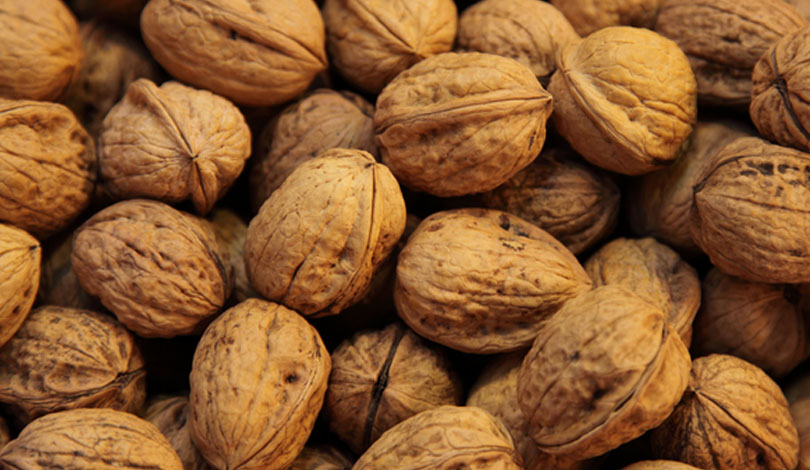
Taking advantage of nearly 100% customs duty disparity, traders reportedly import walnuts cheaply from China and then smuggle them illegally into India.
An incident in Jestha (May-June) 3 confirmed this trend when armed police seized a large quantity of walnuts being smuggled from Siraha border area to India.
Government officials acknowledge that because walnuts are expensive, not all imported quantities are consumed domestically.
One official stated, “The entire quantity doesn’t get consumed in Nepal. There have been and still are instances of smuggling to India due to their customs policies. Traders may be illegally exporting them.”
He further explained that earlier, traders imported shelled walnuts from China and then exported only the kernel to India. This practice contributed to abnormal import figures.
He added, “Containers disguised like those carrying palm oil were sent to India after adding value to the walnuts, though the government has taken steps to control this practice.”
Walnut Import Statistics
In fiscal year 2073/74, Nepal imported 364,878 kilograms of walnuts worth NPR 9 crore 7 lakhs 34 thousand. This number has been increasing steadily ever since.
In 2074/75, 602,367 kilograms worth NPR 14 crore 42 lakhs 5 thousand were imported, followed by 779,462 kilograms worth NPR 21 crore 78 lakhs 47 thousand the next year.
In 2076/77, imports saw an unusual spike, increasing from NPR 21 crore to NPR 77 crore 44 lakhs 83 thousand, with a quantity of 2,453,409 kilograms.
This growth crossed the NPR 100 crore mark for the first time in 2077/78 when Nepal imported 3,479,837 kilograms worth NPR 105 crore 97 lakhs 3 thousand.

Import volume dipped somewhat in 2078/79 with NPR 72 crore 85 lakhs 62 thousand imports totaling 2,379,197 kilograms.
But this decline was short-lived, rising again in 2079/80 with imports worth NPR 91 crore 52 lakhs 46 thousand and totaling 2,806,871 kilograms.
In 2080/81, imports reached NPR 114 crore 13 lakhs for 3,300,000 kilograms.
Potential for Self-Reliance in Walnut Production
As walnut imports soar, the government maintains confidence in boosting domestic production to achieve self-reliance.
Maheshchandra Acharya, head of the National Fruit Development Centre, stated that barren lands in Nepal’s hill regions are suitable for cultivating high-quality walnut varieties, offering an opportunity for self-sufficiency.
He informed that the center is promoting walnuts under various programs, especially through the Hill Nut and Fruit Development Project (NAFA), which prioritizes walnuts as a main crop.
“NAFA project has prioritized walnuts as a primary crop,” he said. “Barren lands in the hilly region are potential areas for walnut cultivation, so we are promoting it.”
Walnut cultivation occurs in more than 20 districts in Karnali, Gandaki, and Sudurpashchim provinces. Traditionally, Nepal grows the hard-shelled and serrated walnut varieties. Although commercial farming started about 15 years ago, its significance has increased over the past 9-10 years, with local and provincial government subsidies attracting farmers.
Production Levels in Nepal
According to the Ministry of Agriculture, Forestry, and Environment’s ‘Statistical Information on Nepalese Agriculture 2081/82’, walnut cultivation area has expanded over the past 11 years, but productivity remains inconsistent.
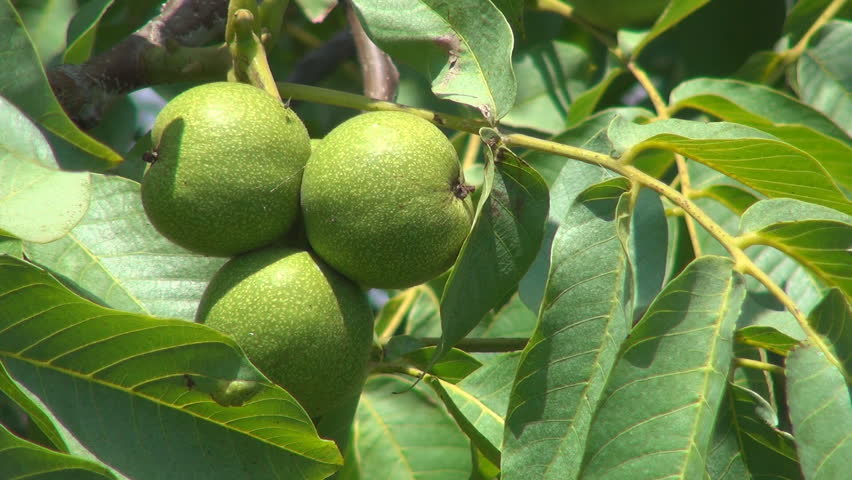
In fiscal year 2071/72, Nepal produced a total of 7,839 tons of walnuts, followed by steady incremental growth over the next four years.
Production reached 7,951 tons in 2072/73, 8,176 tons in 2073/74, 8,213 tons in 2074/75, and 8,934 tons in 2075/76.
In 2076/77, walnut production exceeded 10,000 tons for the first time, reaching 10,051 tons.
Production fell to 9,162 tons in 2077/78 but then rose to 10,895 tons in 2078/79.
It declined again to 9,960 tons in 2079/80.
Overall, the highest production over the 11-year period was in 2080/81, when 13,311 tons were harvested from 2,811 hectares, with a yield of 4.74 tons per hectare.
However, production dropped to 9,366 tons in 2081/82, alongside a reduction in cultivated area to 2,161 hectares and productivity to 4.34 tons per hectare.
While 3,651 hectares were under walnut cultivation in 2071/72 across Nepal, this area increased to 5,273 hectares by 2081/82.