
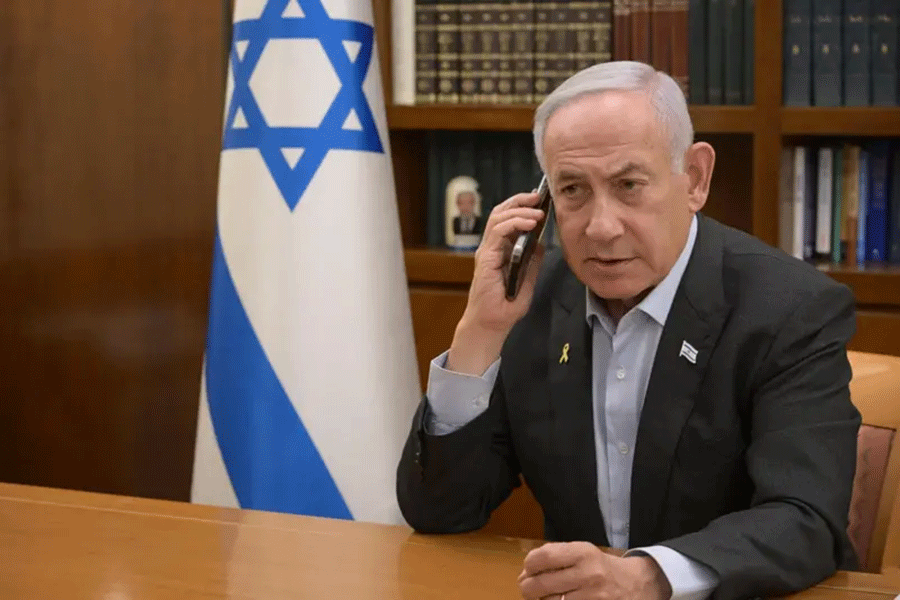
Israel’s General Election Today: Will Netanyahu Retain Power or Will a New Government Take Charge?
Israel is holding its general election today, Tuesday, which will determine whether Prime Minister Benjamin Netanyahu remains in power or a new government is formed. This time, Netanyahu faces challenges from former military chief Gadi Eisenkot, Naftali Bennett, Yair Lapid, and Avigdor Lieberman. Netanyahu’s coalition is backed by right-wing leaders, and forming a government requires a minimum of 61 seats in the Knesset.
October 27, Kathmandu – Israel holds its general election today, Tuesday, October 27, which will clarify whether the current Prime Minister Benjamin Netanyahu will continue in power or a new government will be established. Since 1996, Netanyahu has served as Israel’s Prime Minister for over 17 years. His supporters present him as a strong leader on security matters. However, critics have raised concerns following the Hamas attack on October 7, 2023, citing weaknesses in security arrangements and allegations of corruption.

During the ongoing conflict in Gaza, the International Criminal Court (ICC) has issued an arrest warrant for Netanyahu, citing alleged war crimes.
Who are Netanyahu’s main challengers?
This election, former military chief Gadi Eisenkot is contesting with his new centrist party ‘Yesh Atid.’ Eisenkot lost his son during the war in Gaza. Former Prime Minister Naftali Bennett and Netanyahu’s former ally and ex-commando Yair Lapid are collaborating under the ‘Together’ coalition. Former Defense Minister Avigdor Lieberman has emerged as a prominent critic of Netanyahu. Lieberman’s party, ‘Israel Our Home,’ enjoys significant support from Israeli immigrants from the former Soviet Union.
Netanyahu’s coalition is supported by right-wing leaders such as Finance Minister Bezalel Smotrich and National Security Minister Itamar Ben-Gvir. These leaders advocate stringent policies against Palestinians and the expansion of Israeli settlements in the West Bank, policies that have drawn widespread international criticism.
The Israeli parliament, the Knesset, comprises 120 seats. Securing at least 61 seats is necessary to form a government. U.S. President Donald Trump has also expressed support for Netanyahu. The number of seats the upcoming government wins will be the key factor determining Netanyahu’s political future. Cooperation among opposition parties and smaller parties’ support may also play a decisive role in government formation.
Voters cast ballots for political parties rather than individual candidates, with seats allocated proportionally based on votes received. Under this system, if no single party wins an outright majority, coalition-building becomes essential. Therefore, the total seats won by the party with the most votes, along with those potentially obtained through alliances, will directly influence Netanyahu’s political trajectory.