
Sudan Gurung Takes Oath Wearing Traditional Ethnic Attire, Charms Attendees with Ghale and Kachhad Garments
Sudan Gurung, elected as a member of the House of Representatives from the Rastriya Swatantra Party (Raswapa), appeared at the oath-taking ceremony dressed in his traditional ethnic attire. He was elected from Gorkha Constituency No. 1.
Adorned in a white kachhad, patuka, dosalla, and traditional Dhaka topi, Sudan Gurung’s outfit attracted significant attention.
Main Highlights of Sudan Gurung’s Attire
The Dhaka topi worn by Sudan Gurung is a traditional Gurung community hat. Gurung ‘Tamu’ men typically wear such woolen or Dhaka fabric caps during cultural and formal events. This hat clearly represents Gurung cultural identity.
Over a short-sleeved white shirt with black check print, he has draped a white dosalla ghale or shawl in a crossed style over his shoulders. This dosalla is commonly seen as a decorative element and symbol of respect in Gurung male attire.
Around his waist, he wears a wide dark-colored belt with a large golden buckle, representing a modern version of the traditional patuka. For the lower garment, he dons a white kachhad/dhoti style bottom, which is the primary traditional lower garment for Gurung men. This attire is practical, comfortable, and closely associated with the Himalayan lifestyle.
Significance of Gurung Traditional Dress
The typical Gurung male attire consists of kachhad, patuka, bhoto/bhangra, and the topi. This dress is well suited for the cold climate and daily life of the Himalayan region. Although the combination Sudan Gurung wore is not fully traditional, it offers a beautiful blend of tradition and modernity. The checked shirt and contemporary belt add a modern touch.
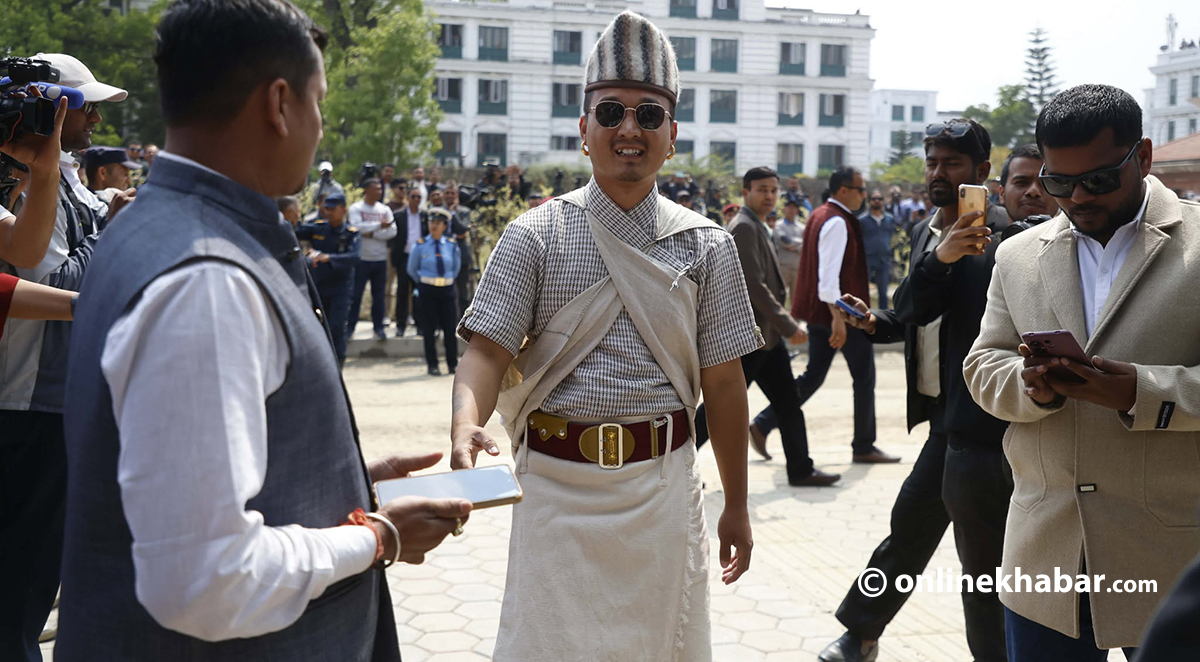
Appearing in traditional ethnic attire at a nationally significant event like the oath-taking ceremony reflects Sudan Gurung’s respect for cultural diversity and inclusiveness.
Just as Balendra Shah (Balen) wore Silama Sakma’s traditional dress, Sudan Gurung conveyed a message of cultural pride and unity in Nepali politics through his Gurung attire.
This outfit is not merely a combination of clothes but a profound symbol deeply connected to the history, culture, identity, and pride of the Gurung ‘Tamu’ community.
Photos: Vikas Shrestha / Chandra Ale