
‘Paying Loan Interest Feels Like Becoming Homeless’
News Summary
Editorial Review.
- Women farmers oppressed by high interest rates and exploitation from microfinance institutions have launched a collective hunger strike at Maitighar, Kathmandu, demanding justice.
- Victims claim that many families have become homeless due to inability to repay microfinance loans, with over 1,500 suicides reported since 2018 (2075 BS).
- Although the government has started talks with the protesting victims, they accuse it of failing to implement the Supreme Court’s directives.
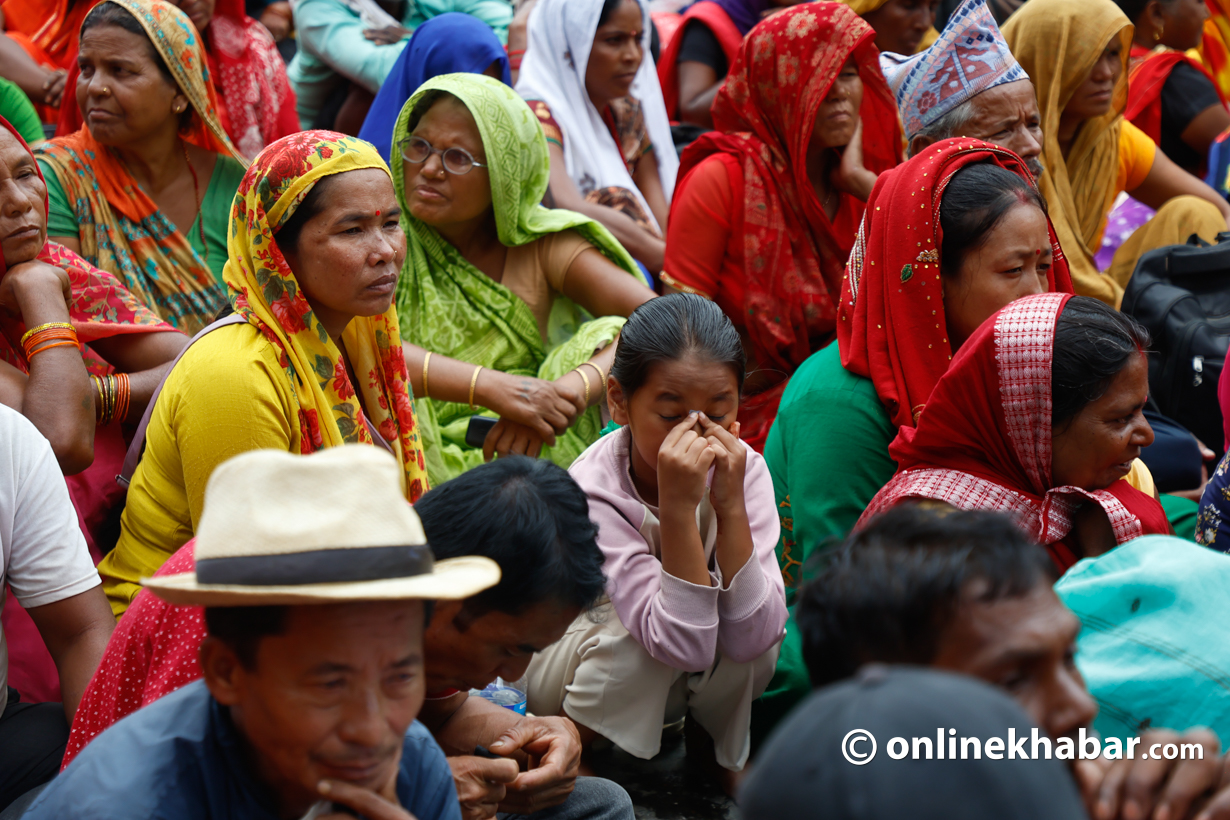
15 Shrawan, Kathmandu – In recent days, the area around Maitighar in the federal capital Kathmandu has witnessed an unusual scene. A gathering of women from the Terai region in traditional yellow sarees and green blouses creates a distinct sight beside Maitighar road.
At first glance, they appear to be participating in a religious festival, but these women have actually come from various districts of Terai after leaving their homes, seeking justice and hoping the state will hear their grievances.
Despite their presence, little progress has been made, and the government has paid scant attention. Forced by circumstances, they began a collective hunger strike on Tuesday, 12 Shrawan.
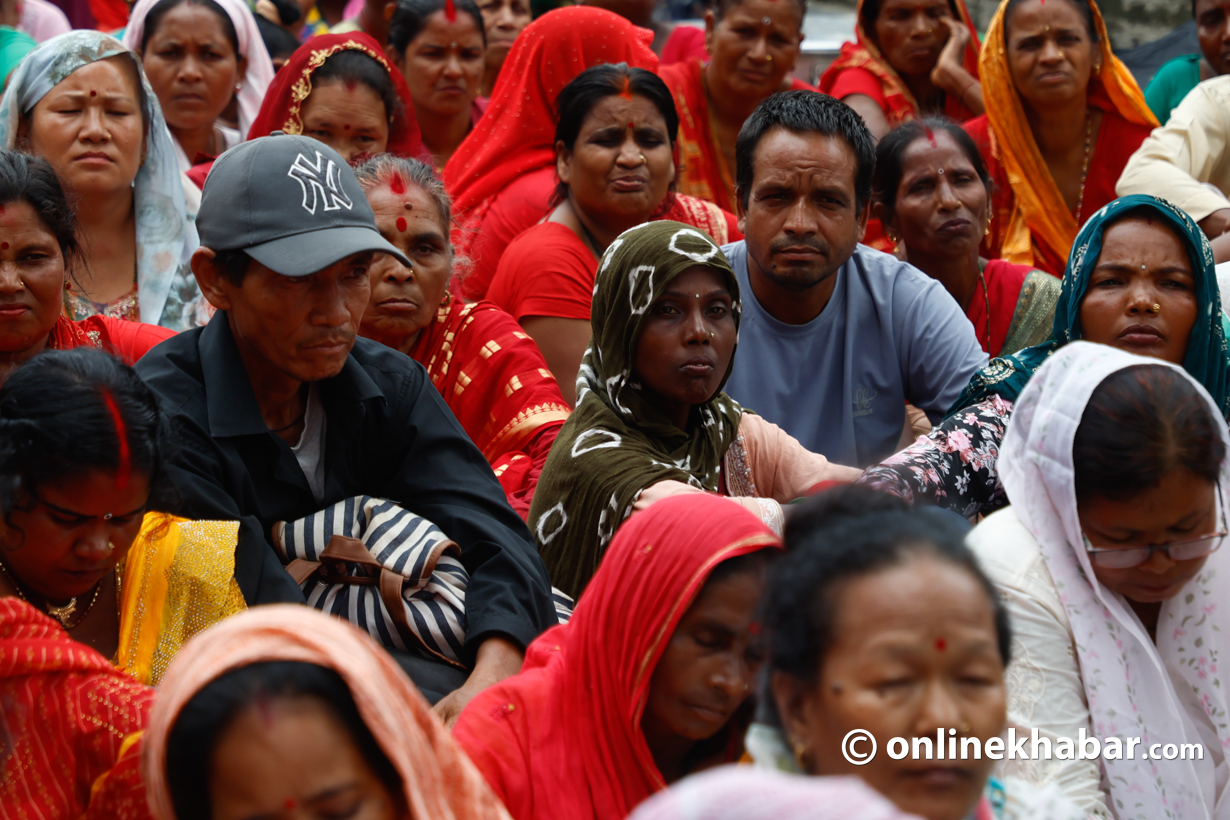
The poor women farmers have not been spared by the weather either. Although it is monsoon season with rainfall, they find shelter under tarps and plastic roofs. Security personnel do not permit them to hang tarps, so in rains, they must shield themselves with plastic sheets. They cook, eat, and spend nights on the streets of Maitighar.
These women from districts such as Siraha, Saptari, and Dhanusha have been adversely affected by microfinance institutions and have gathered in Kathmandu’s Maitighar to demand justice through a hunger strike.
They took loans from microfinance institutions under group guarantee schemes to improve their economic status by running businesses, but have now been forced into homelessness and see the hunger strike as their last resort for justice.
One victim woman revealed that the suffering caused by interest rates accruing on loans—more than just suicide—has led her to seek justice through a hunger strike.
According to her, over 1,500 microfinance victims have taken their own lives since 2018. “Microfinance, set up to improve the finances of the poor, ended up pushing them into violent interest rates that made them homeless,” she said. “What kind of government cannot implement the Supreme Court’s directive?”
All the protesting victims share similar problems. Shilam Yadav from Bardibas, Mahottari, has become homeless since taking loans from microfinance institutions in 2018.
A mother of three, Yadav ran a cosmetic shop. She explained how after taking a loan to expand her shop, she was forced to leave her home.
She said Divya Microfinance had recently opened in Bardibas and was issuing loans based on citizenship. Hearing from an employee that loans were obtainable, she borrowed 50,000 rupees.
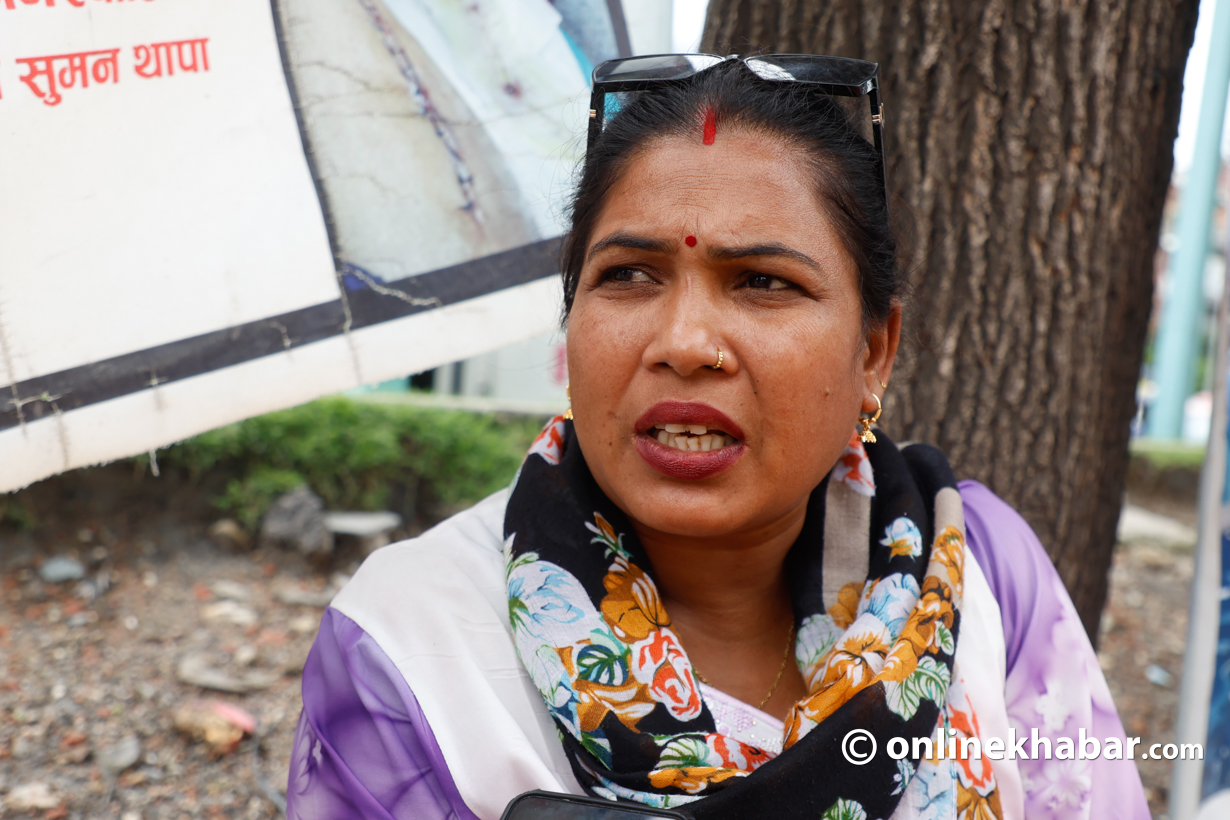
“They initially offered 50,000 with the assurance I could continue repaying to get more. I was not questioned about income, business, or source. They took photocopies of my citizenship and photos and called me to the office within two or three days, where I was given only 46,000 rupees,” Yadav said.
She explained that microfinance deducted 4,000 rupees for service fees and insurance. Interest was applied as if on 50,000 rupees, after which she stopped repaying.
Although she added more stock to her shop, business did not meet expectations. “I earned 5,000 to 10,000 per month, which was enough for the family, but had to pay a 5,000 rupee monthly loan installment. It became difficult to repay from income,” she shared.
As more microfinance institutions opened, she joined others to become members of a dozen institutions. Unable to repay all debts, she became homeless.
“Microfinance’s policy is to pressure repayments by creating groups of ten. If one cannot pay installments, the savings of the rest nine are used,” Yadav lamented.
When installments were missed, group members would come to her home and confiscate items like radios, televisions, furniture, beds, and chairs; livestock was not spared either.
“I took loans and have been repaying,” Yadav said. “To repay one loan, I took another from another institution, ending membership in about eight to ten institutions. I tried to manage business by borrowing at high interest rates (meter interest). Microfinance itself created these high-interest loans. If I took 100,000 rupees, I had to pay 10,000 per week.”
Yadav says she took loans totaling about 1.5 million rupees, with 1 million rupees still outstanding. She complains that the high interest forced closure of her shop.
“The shop was closed for six months. I owed 50,000 rupees for the rented room, which was also locked by the landlord,” she revealed.
Due to microfinance loan practices, she lost 7 tolas of gold, sold 1.5 kathha of land, and is now forced to live in a homeless settlement. Her shop was sold for just 30,000 rupees.
“I paid 1.8 million rupees at meter interest, and 700,000 rupees to microfinance, but still owe 1 million rupees. I joined the protest as I saw no alternative,” Yadav stated.
Similarly, Mahottari’s Yubaraj Rasaili said he also suffered due to deceptive microfinance practices. After borrowing about 1.5 million rupees from multiple institutions including Asha Microfinance, Forward Microfinance, Mero Microfinance, Vijay Microfinance, New Nepal, and Infinity Microfinance, he bought a sumo vehicle but is now homeless.
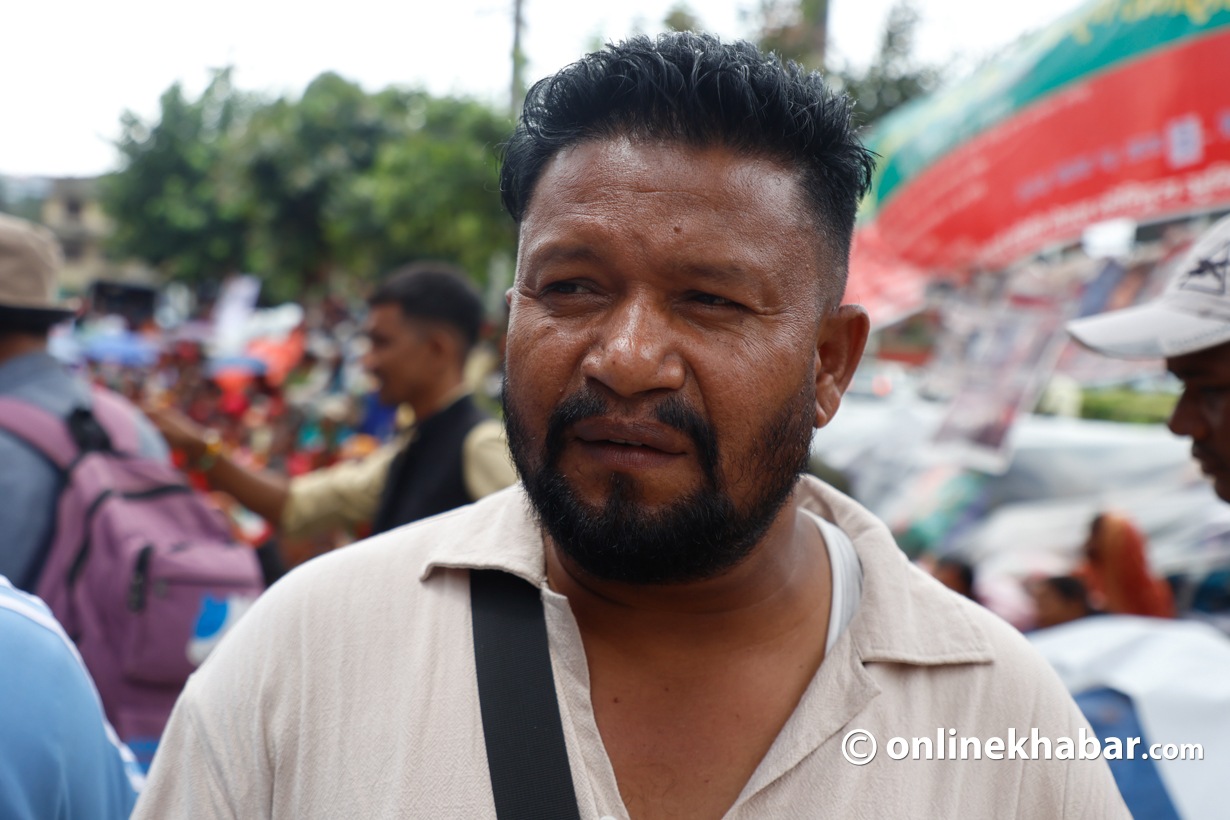
According to Rasaili, after purchasing the vehicle, the lockdown began, preventing him from operating it. He invested in vegetable farming instead.
“I could not run the vehicle for six months; the vegetables spoiled in the fields. After lockdown, microfinance stopped lending, threatening borrowers by saying ‘repay the loan or we will seize your vehicle, put a lock on your house, and register your death.’ I took meter-interest loans to repay debts.”
Unable to repay loans with meter interest, Rasaili said his house was locked down. He then repaid debts by selling the vehicle and some land.
Similar to Rasaili, Tara Pandey from Palpa also suffered from microfinance exploitation. She complains that although loans are supposed to have a 15% interest rate, she had to pay between 36% to 52%. She was compelled to transact with 13 different institutions after initially taking a loan of 100,000 rupees.
Pandey, who sold her rented house five years ago to pay off loans, now rents accommodation. “I lost money for building a house and lost the rented house as well,” she said.
She took loans to rear goats but said microfinance demanded monthly installments with astounding frequency, sometimes before the month ended.
Showing the goats she raises, she said microfinance has given loans to ten more people in the community, aiming to keep increasing lending.

The government has formed a negotiation committee and started talks with the microfinance victims on Thursday to address the issues of those on hunger strike in Maitighar.
The first round of talks between the government and the protesting victims took place on Thursday. While positive, they have yet to reach a final resolution, and a second round is scheduled for Friday.
Victims continue their indefinite collective hunger strike, accusing the government of failing to enforce the Supreme Court’s directives.
The Supreme Court had issued a directive instructing the government, Nepal Rastra Bank, and the Association of Microfinance Bankers to agree on solutions for the victims’ problems. However, the government’s non-compliance has fueled the protest movement.
Photos: Bikash Shrestha