
‘Like Narada Muni, Information Can Instantaneously Reach Another Place’ — Possibility of Information Transfer via Quantum Technology
News Summary
Reviewed and prepared.
- Dr. Yadav Prasad Kandel, a Nepali scientist at IBM USA, is conducting significant research in quantum physics and computing.
- He has played a crucial role in developing technology to successfully teleport information by entangling electron qubits on quantum chips.
- With advancements in quantum computers, substantial progress is expected in discovering medicines for complex diseases and addressing climate change challenges.
On the occasion of International Youth Day, Dr. Yadav Prasad Kandel, featured in the recently published ‘Top 40 Under 40’ list, is a renowned quantum scientist. Holding a PhD in Quantum Physics from the University of Rochester, USA, he works as a scientist for IBM, one of the world’s leading technology companies. Here, Dr. Kandel explains what quantum science is and how it currently and will potentially impact society:
What is quantum physics? Please explain it in simple terms for general understanding.
Quantum physics is like the most fundamental language of nature. Its research began nearly a century ago. Nature operates differently at different levels. Generally, we understand the world through shape, weight, and motion.
However, the universe includes much bigger entities such as stars and galaxies, as well as much smaller particles like atoms, electrons, and protons. The strange behaviors of these tiny particles cannot be explained by classical science or Newtonian laws. Quantum physics is the science that explains the energy, interaction, and behavior of these microscopic particles.
Just as people behave differently alone or in groups, atoms and molecules also behave differently when isolated or grouped. All objects are made of microscopic particles, and understanding their intrinsic nature requires quantum physics, which studies microscopic waves of light and sound.
For example, in ancient mythology, Narada Muni is said to travel instantly from one place to another; similarly, quantum physics allows information to instantly reach from one spot to another through what is known as quantum teleportation. However, it is only information that is transferred, not physical objects or particles.
What is the difference between classical physics and quantum physics?
Physics is broadly divided into classical and quantum physics. Classical physics studies everyday phenomena like plants growing and the effects of force, while quantum physics explains the strange and amazing events in the microscopic world.
For instance, common sunlight can be explained by classical physics, but the behavior of laser light cannot. Modern technologies require purification and measurement of materials at the atomic level, which quantum physics facilitates.
How did your interest in quantum physics develop?
Quantum physics is studied theoretically in Nepal, and I have always been eager to acquire new knowledge. Initially, I was interested in astronomy, but it was largely explained by classical physics. However, quantum physics presents concepts like ‘superposition’, ‘entanglement’, and ‘teleportation’, which fascinated me greatly.
I began my research by conducting studies and simulations in my own lab and later advanced the field through laboratory work.
What research did you undertake during your PhD, and what discoveries did it reveal?
During my PhD, my main focus was designing quantum chips and testing hypotheses related to them. Unlike traditional digital computers, quantum computing involves creating qubits, and my work centered on this.
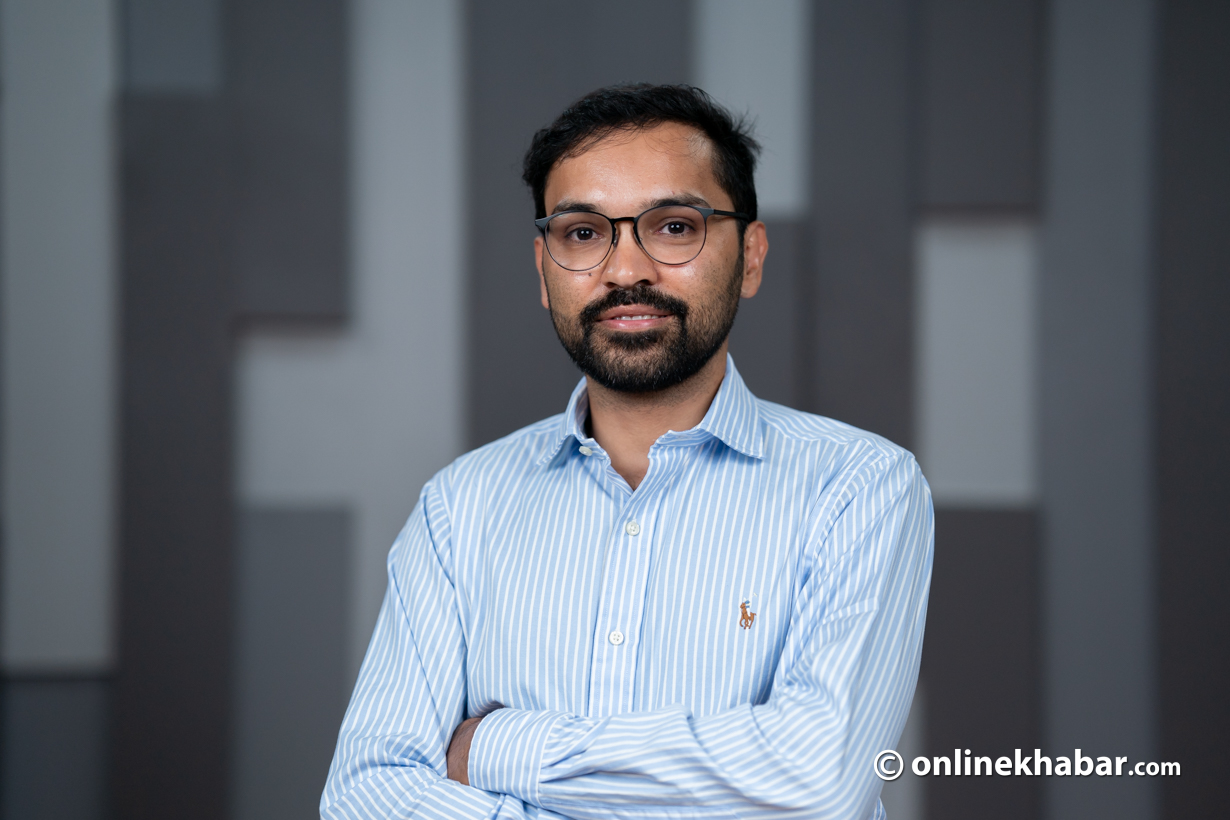
My research focused on entanglement and teleportation. Since measuring the properties of electron qubits on silicon wafers is challenging, I developed a technique to entangle qubits by controlling electrons in a square grid. Using teleportation technology, I successfully transferred the information of one qubit to another.
Your PhD research was published in the journal ‘Nature’. Despite the technology’s development, what impact does it have?
In classical computers, information remains unchanged when observed, but qubits in quantum computers lose coherence upon measurement. Therefore, quantum information cannot be sent directly through wires nor can it be copied because of the no-cloning theorem. Thus, entangled particles allow secure information teleportation without destruction, forming the foundational basis for data transfer in new quantum computers.
What are current quantum computers capable of, and what future possibilities do you see?
Digital computers suffice for daily tasks, but quantum computers are essential for complex calculations and deep research. They enable simulation of intricate chemical processes and play a significant role in studying climate change.
Quantum computers are addressing problems that even the largest supercomputers can only estimate. Among 118 chemical elements, only hydrogen’s properties are fully understood; quantum computing will simplify drug development and creation of new materials.
Currently, quantum computers are not replacements for digital ones but are used for solving problems considered impossible with traditional means.
I believe the first practical uses will be in drug discovery. Quantum computing will also impact cybersecurity, capital markets, and financial trading.
What kind of research are you currently conducting at IBM?
At IBM, I work similarly to university labs but within a major technology company researching future technologies. I engage in fundamental physics research addressing the challenges and critical technologies in quantum computing.
Are you continuing the research from your PhD?
Yes, it is an extension of that research. I focus on basic research without immediate product development, guiding the way for future quantum computers.
What is the current level of government and private sector investment in quantum computing?
Quantum research began in the 1990s. Initially, governments and universities invested. Now, there is intense competition, with the US, China, Europe, and Australia allocating substantial budgets. IBM has announced plans to invest $1 billion over the next five years.
What is the biggest achievement in quantum computing so far?
The greatest achievement is the ability to simulate chemicals. Quantum computers have improved solutions to problems digital supercomputers couldn’t solve, aiding in treating complex diseases and developing new technologies.
How will quantum computing contribute to healthcare and the economy?
There is ongoing competition among global powers due to economic and strategic importance. Controls on technology exports are increasing. Similar to the space race in the 1960s, there is now a race to build the first fully operational quantum computer.
This will revolutionize new economic structures and technological innovation. Like AI, quantum computing is expected to have a profound future impact.
When can we expect fully practical quantum computers?
IBM plans to develop a prototype computer by 2029 that safeguards data against environmental effects. The goal is to create fully capable large quantum computers by 2033.
Are you involved in this roadmap?
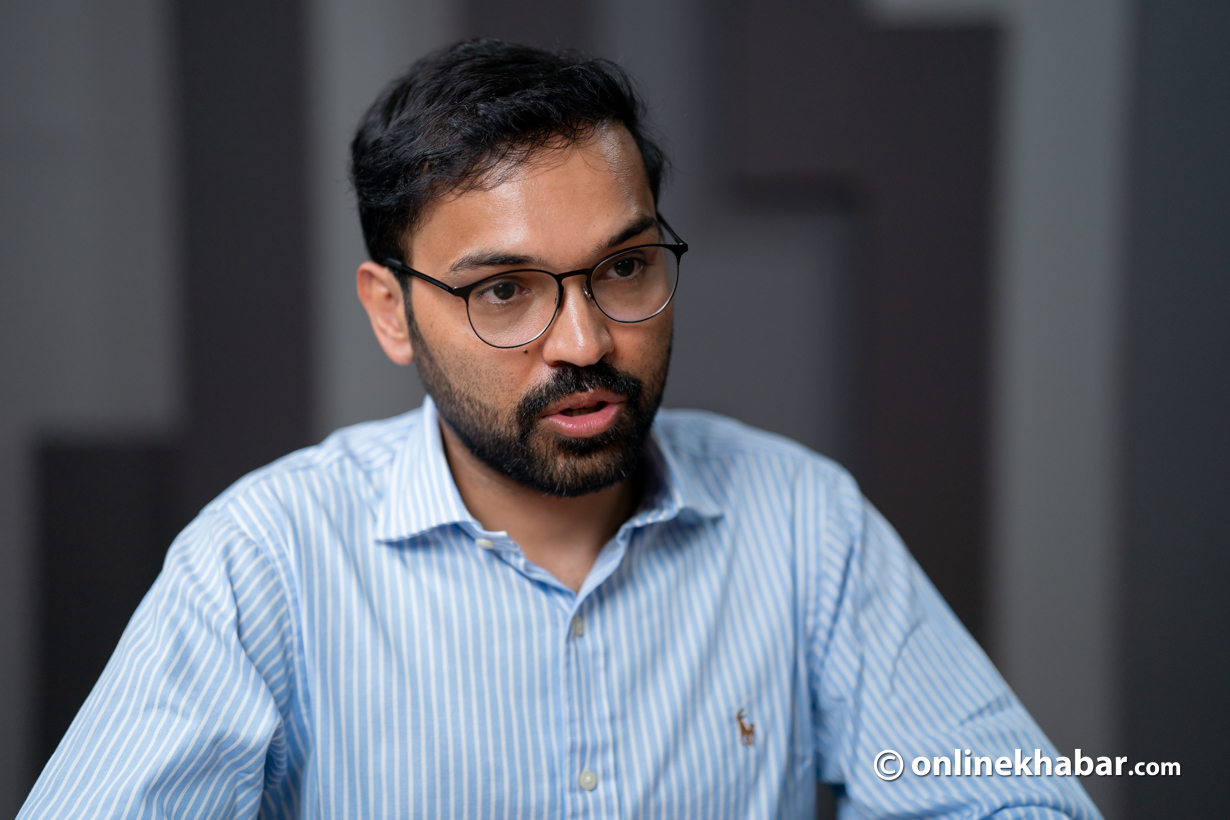
Yes, I am part of the fundamental physics research team. In 2019, Google claimed quantum supremacy; now, the industry is advancing towards quantum advantage.
Have quantum computing benefits already begun to materialize?
Yes, benefits have started. IBM’s quantum processors are accessible via the cloud. By 2033, systems with thousands of qubits are expected to be developed.
What is the research environment at IBM?
The TJ Watson Research Center has a long, rich history. Magnetic swipe cards for debit and credit and early digital computing devices were developed here. The research culture prioritizes careful results over rushing but is enthusiastic about new discoveries.
What unusual phenomena have been discovered in quantum computing so far?
Quantum principles are fascinating. For example, a digital computer’s stored ‘one’ remains static, but a quantum qubit changes its state upon measurement.
Quantum particles exhibit both wave and particle properties, allowing electrons to tunnel through barriers despite electric fields confining them.
Like ancient mythology, information can instantly transfer from one place to another without wires or physical medium, called ‘quantum teleportation’.
Science and technology know no geographic or political boundaries. Nepali scientists and technologists are making significant contributions to world-class advanced technologies and quantum computing.
Two entangled microscopic particles can be located at opposite corners of the world, yet information can transfer between them without any wire or physical medium. This is not like Bluetooth or Wi-Fi; quantum teleportation involves no intermediary and no disturbance.
How do you see the status of students and scientists progressing from basic education to advanced research in Nepal?
Science and technology have no political borders. Nepali scientists contribute significantly to world-class technologies and advanced research.
Because Nepal lacks capacity for high-risk and high-investment research, many scientists are abroad. However, Nepali-origin scientists are now playing roles worthy of pride on the global stage.
Once fully developed, how can a country like Nepal, which is economically and infrastructurally weak, benefit from this technology?
Technology has two sides — producing it and consuming it. Nepal may not manufacture hardware but can engage in theoretical study and software development at its universities. Since technology is accessible via cloud, research and development can be done within Nepal, greatly benefiting the country.
Does this mean universities should start preparing now?
Yes, delayed preparation will cause setbacks and slow technology adoption.
Do you have any plans to contribute personally or institutionally in Nepal?
While at IBM I cannot directly contribute, collaboration with companies and research institutions is possible. Although cloud-based quantum computing incurs fees, researchers can receive funded free access. Thus, initiatives to provide access and support to Nepali researchers can be undertaken.
What plans do you have to contribute to Nepalese society in the future?
Currently, I focus on experimental research. In 5 to 10 years, I plan to return to Nepal with additional expertise to establish a research center, work as a university professor or partner, and prepare future generations.
We used to gain inspiration from professors’ experiences while studying, so I wish to return and guide the new generation in Nepal.