
The Silent Streets of Patan and the Weary Dogs Painted in Ink
Summary
- Painter Nabin Nablo has launched an exhibition titled Temples, Nature and Poses at Gallery M-Cube in Patan, focusing on the silence of Patan and the stray dogs resting on its streets.
- Nabin insists on using photographs he personally takes from his surroundings rather than internet images, aiming to capture the authentic atmosphere of Patan’s alleys.
Amid the hustle and bustle of Kathmandu, there lies a world where time seems to momentarily stand still. Observing the dogs resting or sleeping in front of the small stone sculptures and chaityas in Patan’s narrow streets, one can sense a frozen moment. These animals exhibit an aura of solitude and exhaustion.
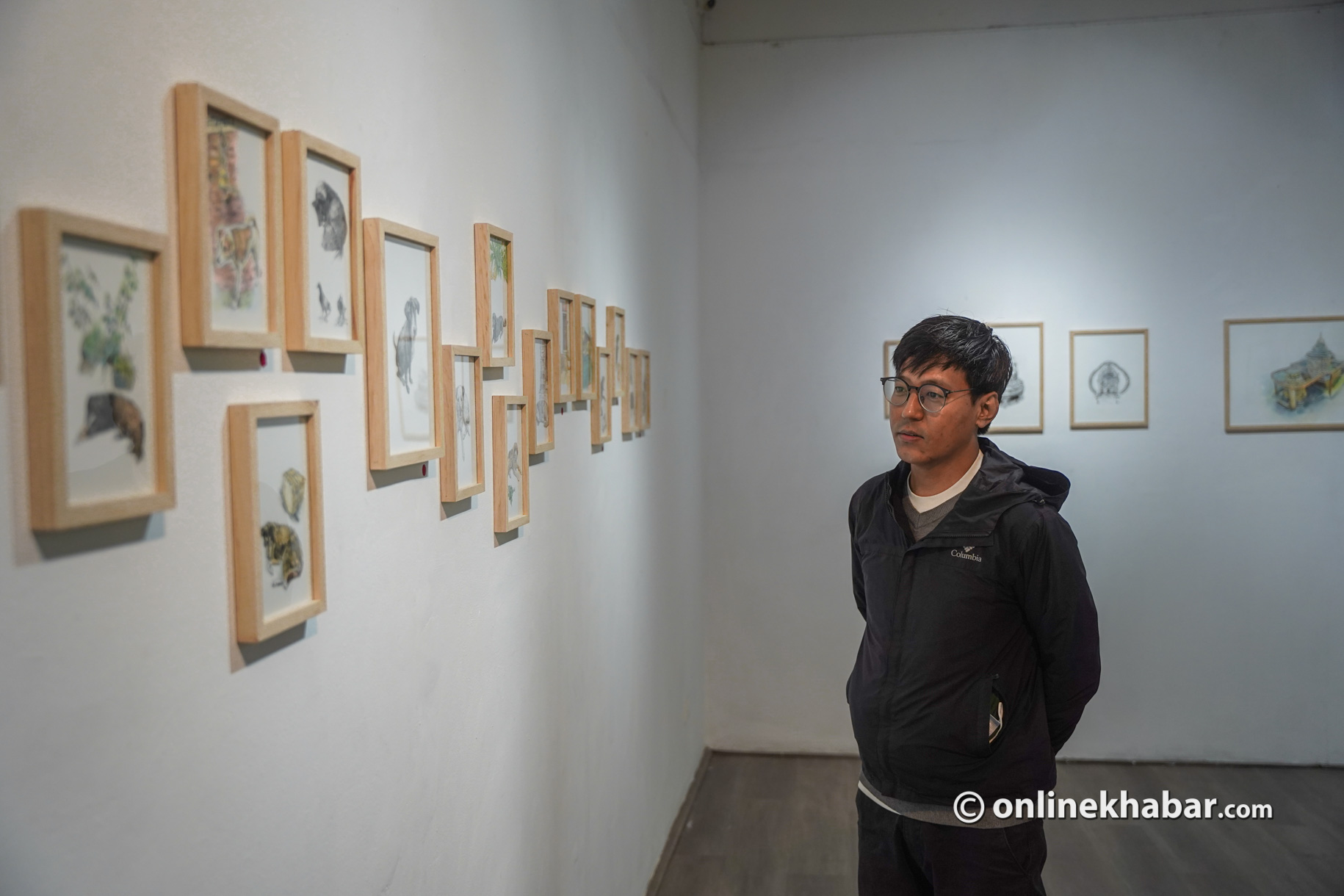
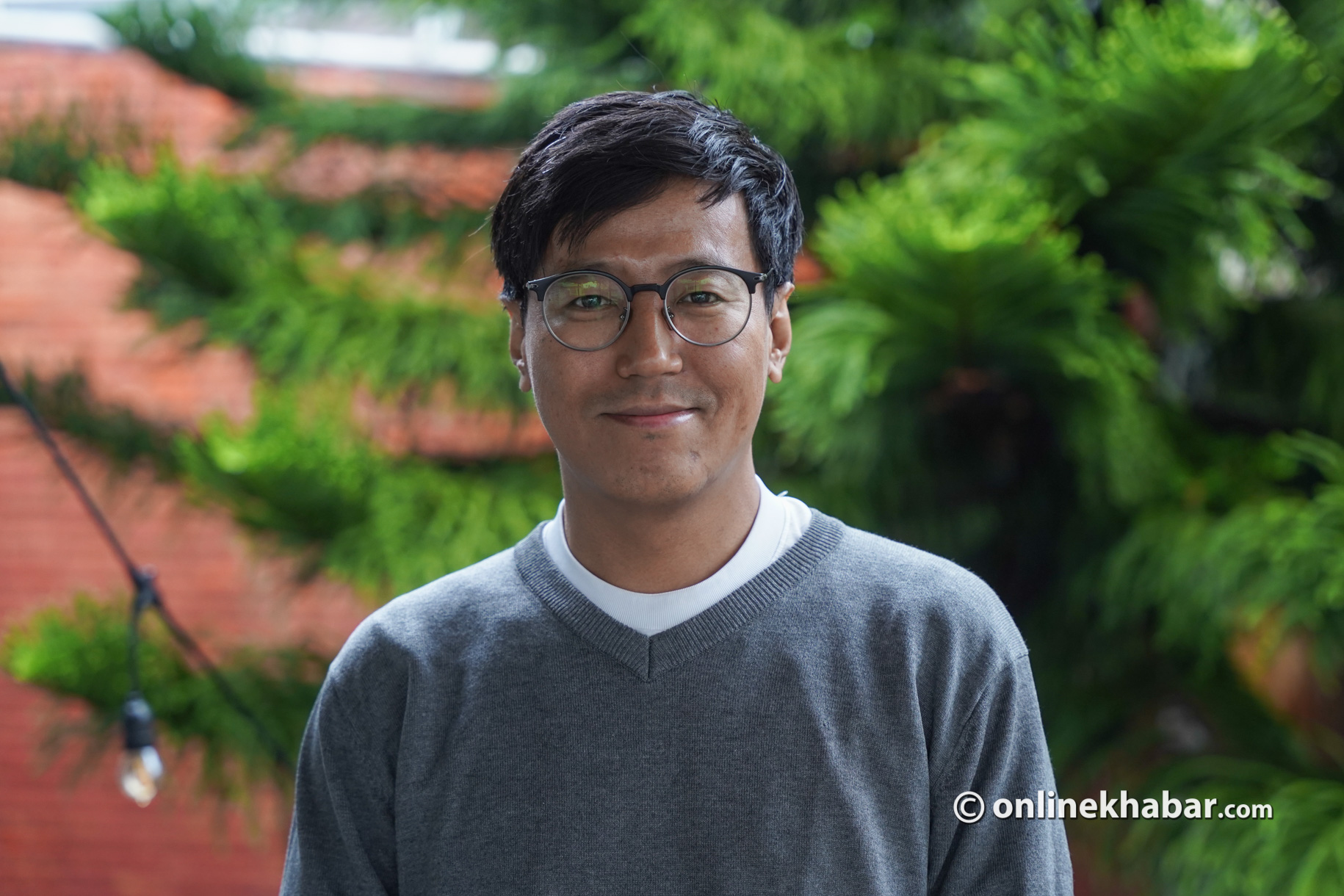
Artist Nabin Nablo attempts to depict this silence and these dogs on his canvases in his solo exhibition titled Temples, Nature and Poses currently on display at Gallery M-Cube, Patan. This marks his second solo painting exhibition.
The paintings showcased here successfully reflect the realities of urban life and also mirror Nabin’s own mental state.
000
Though born in Taplejung, Nabin’s family relocated to Jhapa where he spent his childhood and completed studies up to grade 12. His father promised to send him to Kathmandu provided he performed well in his exams. Despite facing reprimands and even physical punishment for drawing during exam time, Nabin passed with good marks and traveled to Kathmandu in 2009 along with his brother to pursue higher education.
Nabin’s passion for fine arts led him to enroll at Kathmandu University, where he earned his Bachelor of Fine Arts in 2013 and Master of Fine Arts in 2016.
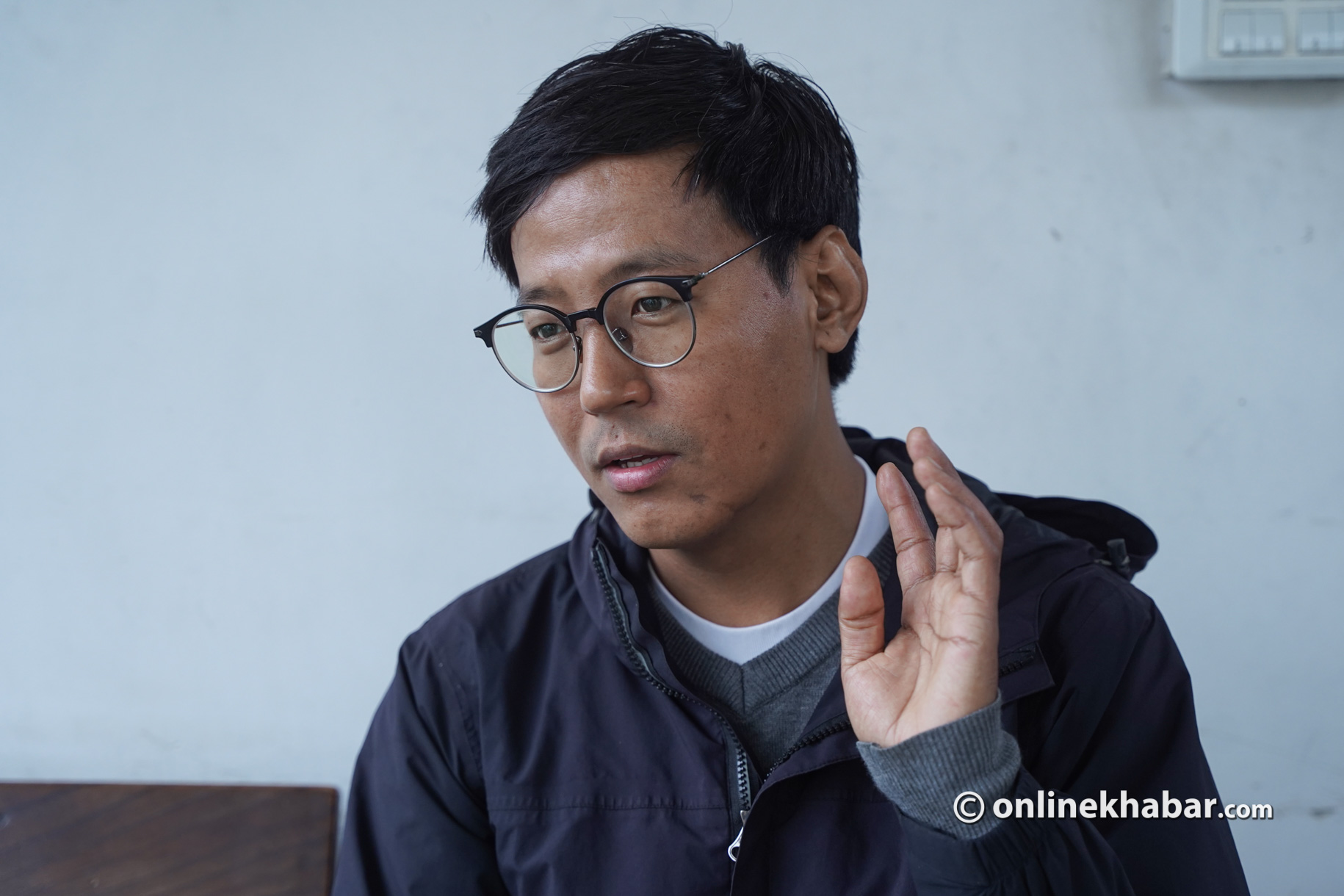
Though his outer life appears calm like his paintings, internally Nabin’s journey has been filled with struggle and solitude. After spending nearly 15 years in Kathmandu, he now lives in Chabahil with his sisters and channels much of his energy into his art. His brothers, including a twin, live abroad. Just recently, while Nabin was seeking subjects for this exhibition in Kathmandu’s alleys, he heard that his twin brother had purchased a home overseas.
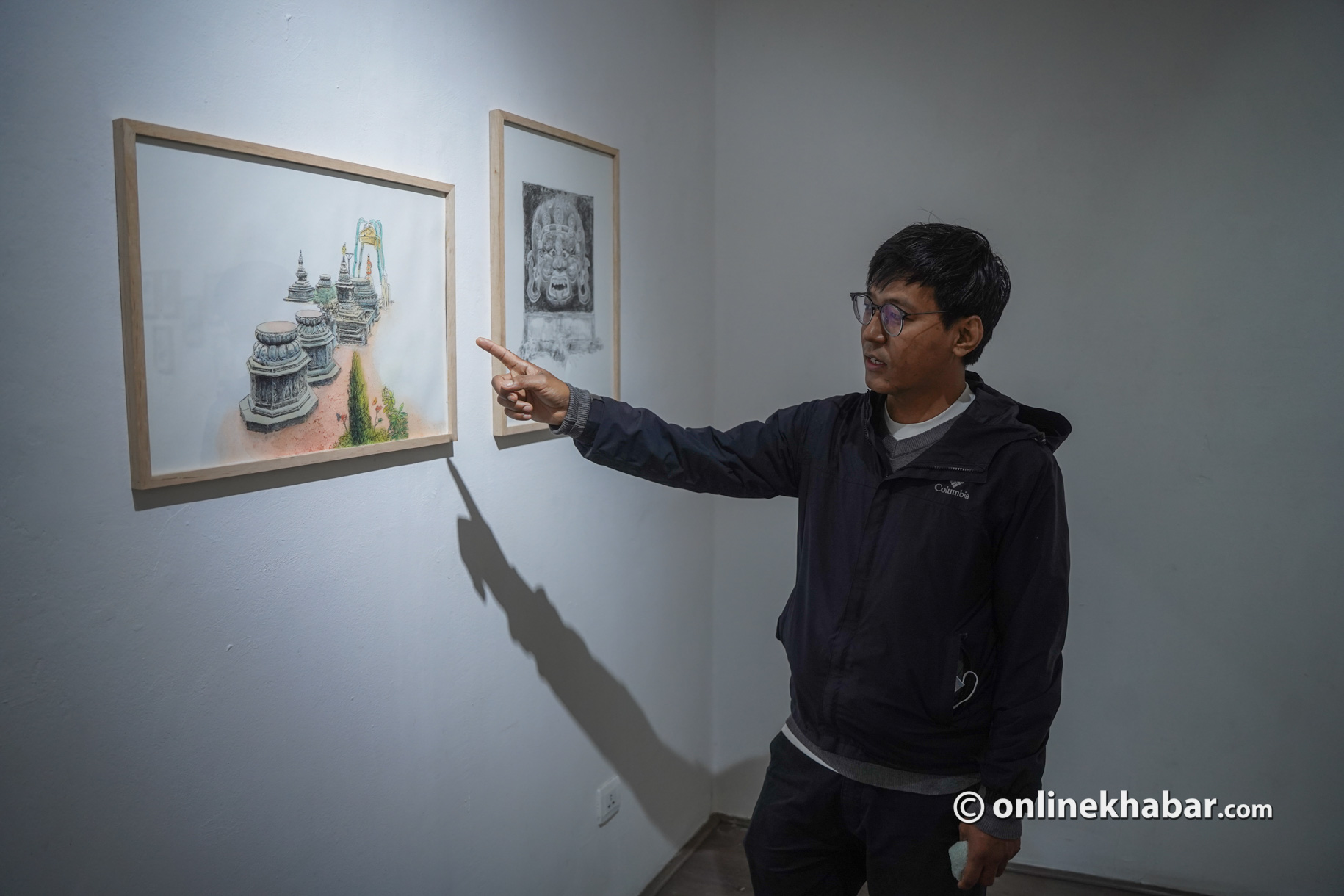
“Everyone else is abroad, even my brother bought a house overseas. Here I am, running around as an artist,” Nabin shares candidly.
Though he speaks openly, there is a palpable sense of loneliness and self-reflection common to artists. Yet this distance from family and the city’s solitude have become his greatest sources of inspiration.
000
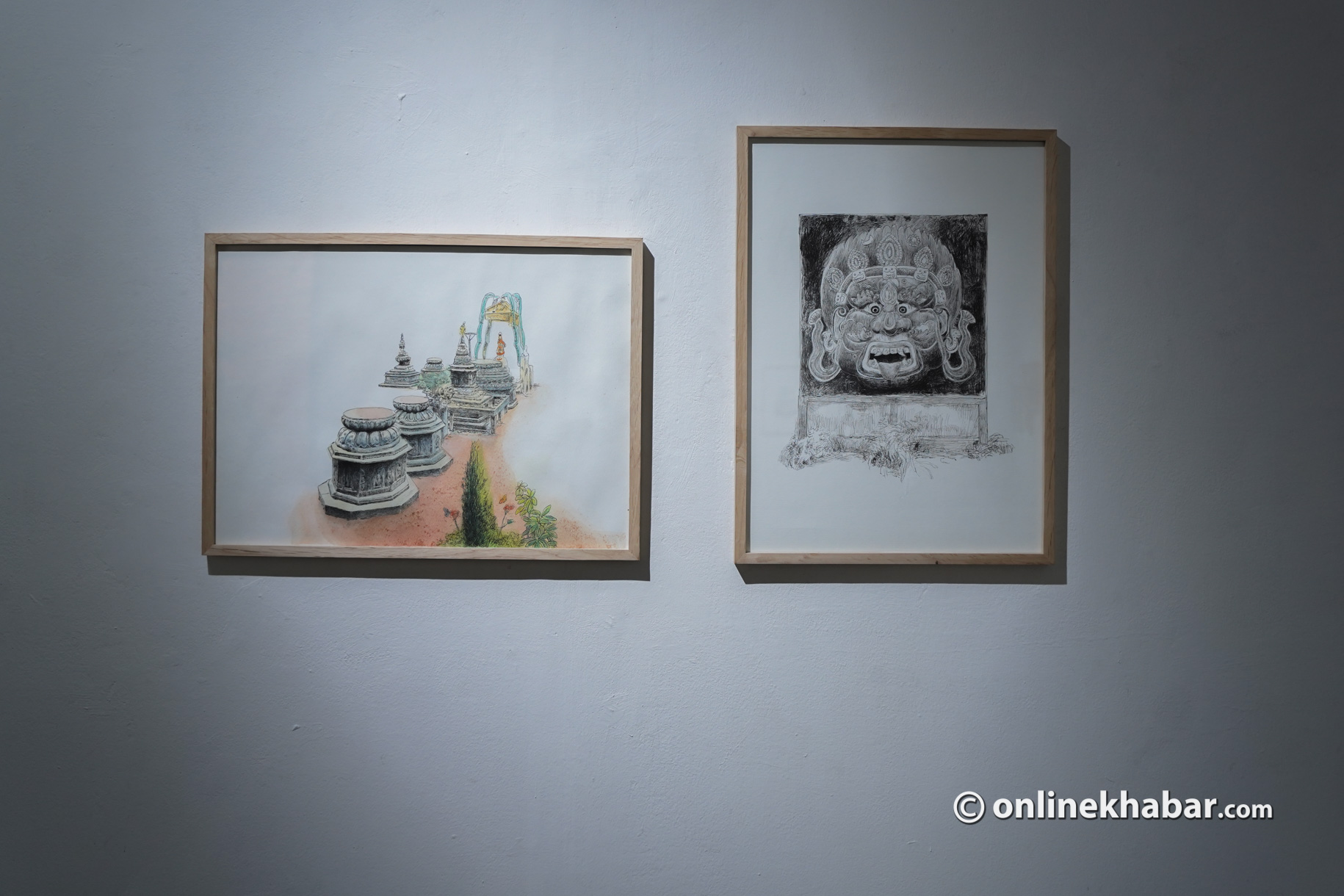
Nabin previously created larger, colorful paintings and portraits. However, he has now shifted exclusively to a precise line and ink style (pen and ink). Focusing on small canvases, he carefully sketches lines that cannot be erased. While the black ink’s richness is appealing, it is also unforgiving as any mistake is irreversible.
“Once wet, the ink cannot be reduced, and it is very difficult to keep the paper clean,” Nabin explains regarding his technique.
More than 30 such artworks are displayed in this exhibition. These artworks feature notable use of white space — the empty parts of the canvas left unpainted.
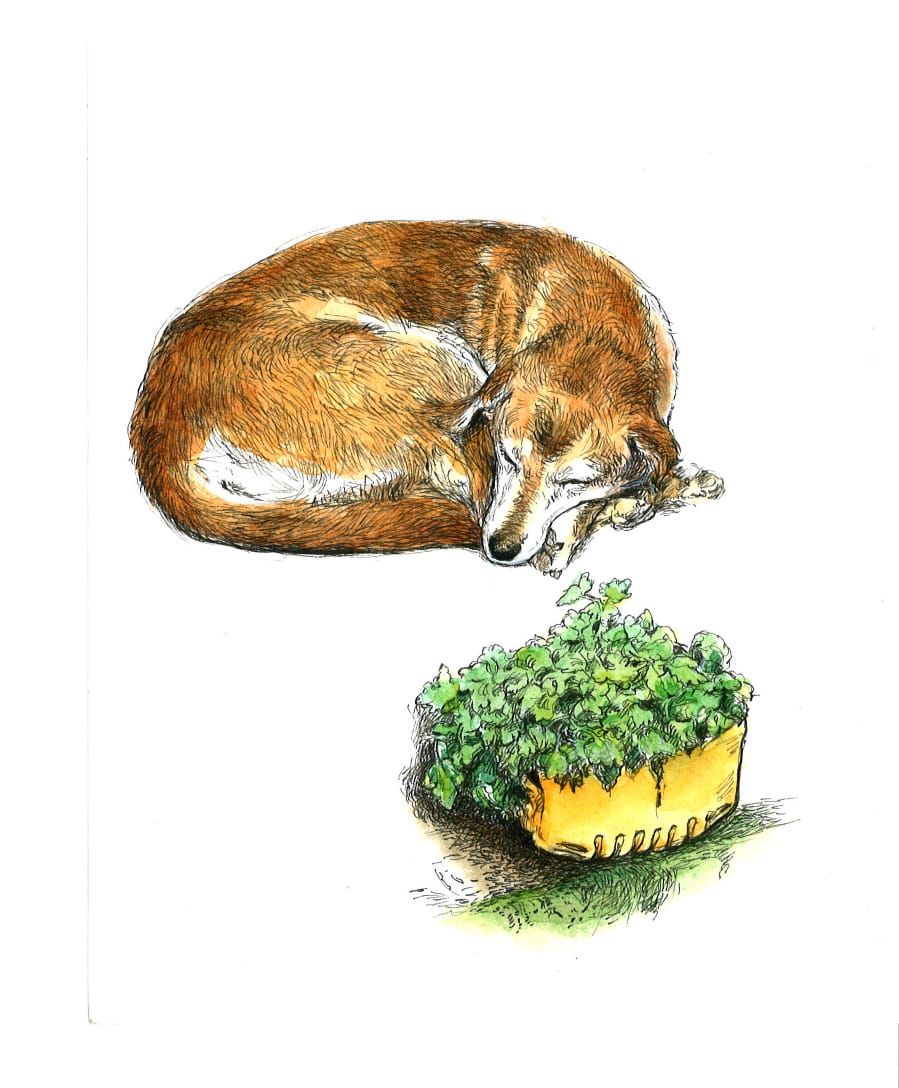
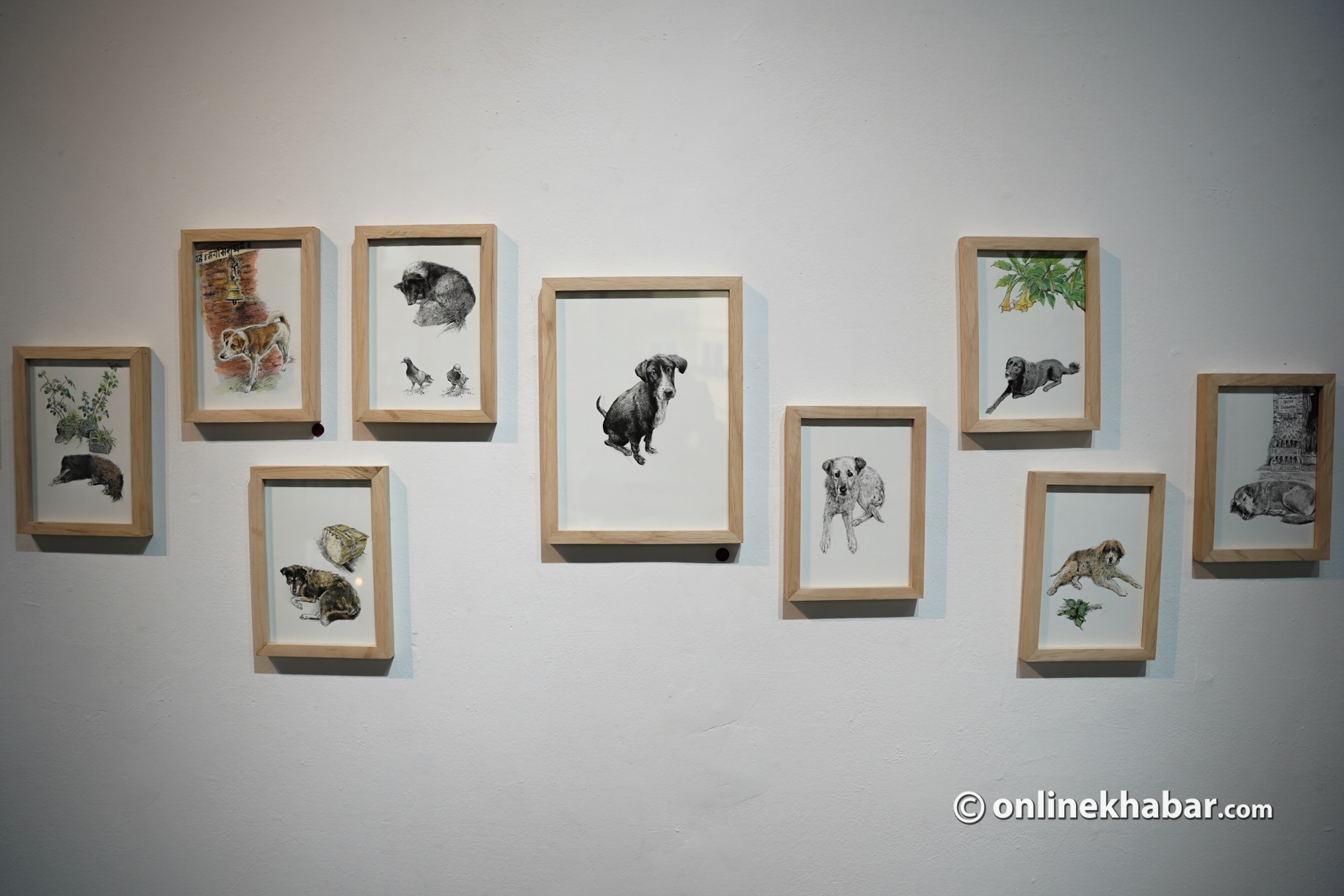
In most pieces, the white space dominates, with the subject placed exclusively at the center. The artworks do not feature traditional frames, drawing the viewer’s eyes directly to the subject matter.
“The white space focuses attention on the subject. If another element is introduced, it must integrate flawlessly, or the composition becomes cluttered,” he notes.
This minimalist approach has become the hallmark of the exhibition.
Many of the paintings feature dogs resting across various locations in Patan. These dogs appear static, tired, or waiting – none show movement, rather embodying a quiet pause.
Nabin has a particular story behind choosing dogs as subjects.
One day, near a slum demolished by the government, he noticed a dog lying despondently amidst the ruins. He captured its image and then created a painting back in his studio. This inspired him to focus on dogs as his central theme.
He continued to discover more such dogs and produce a series of paintings.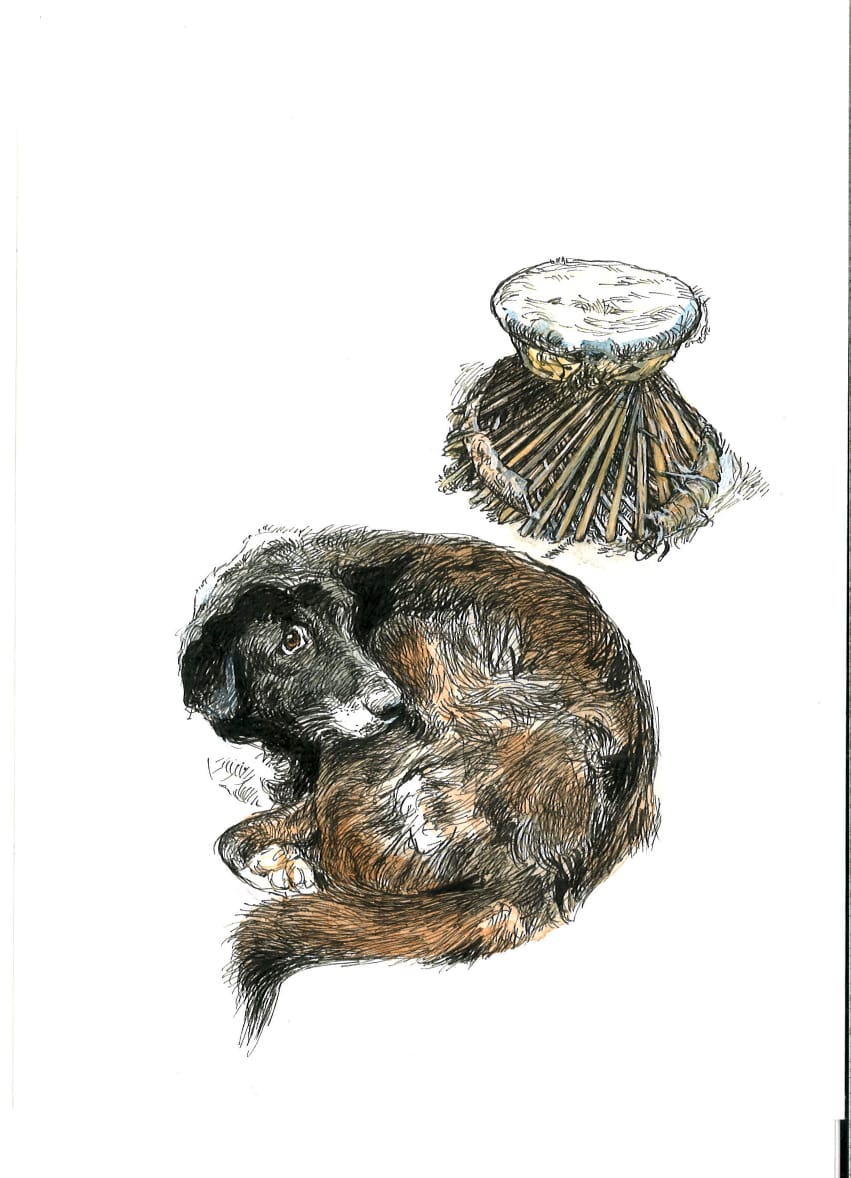
“The race and challenges begin once you reach Kathmandu, and it is very hard. In the fatigue of these dogs, I see my own reflection,” Nabin shares.
He never uses photos sourced from the internet, preferring to take his own. He believes photographs captured with one’s own eyes provide a distinct perspective.
However, Nabin is concerned about the growing trend in the art world of copying Western art styles from platforms like YouTube and Instagram. He insists that it is vital for artists to portray their own environment, culture, and streets on canvas.
“It is extremely important to create art inspired by our own surroundings. That is the true essence,” he says. “I want that hundreds of years from now, when someone looks at these paintings, they recognize them as streets of Patan, Nepal.”
Though Patan is small in area, it has hundreds of temples and chaityas, each with unique narratives. The daily seen subjects — humans or dogs alike — are equally diverse. Nabin especially highlights the dogs resting in front of temples in his paintings.
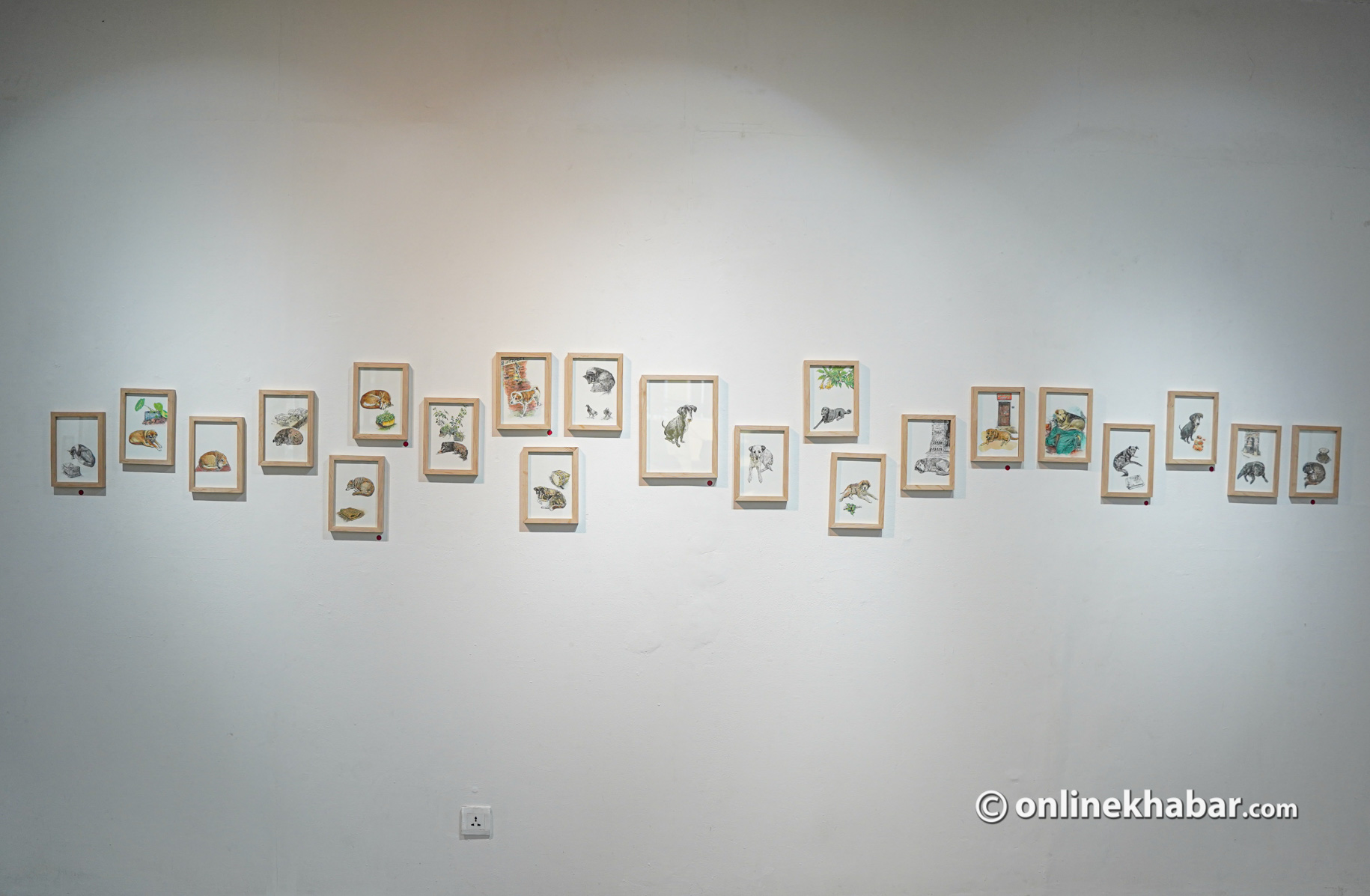
His works capture time frozen in moments while artistically portraying the religious tolerance and coexistence in society. Every delicate stroke of black ink outlines Patan’s dogs and temple figures, inviting the city to pause and reflect for a while.
000
Nabin Nablo is not limited to a single art form. He is also active in cartoons and caricatures within fine arts. His popular caricature style features a large head and small body, effectively enhancing the emotional expression of subjects.
Approaching his 40s but looking much younger, Nabin manages both art and life simultaneously. Fully aware that art rarely offers substantial financial gain, he chooses to enjoy solitude by his own terms.
Photos: Chandrabahadur Ale / Nabin Nablo