
What If the Report Warning of the Bhote Koshi Disaster Had Not Been Shelved?
Summary
- On 24 Ashad 2082 morning, the Bhote Koshi River in Rasuwa flooded, causing 18 people to go missing and damaging the Miteri Bridge, customs yard, containers, vehicles, and roads.
- The report prepared after last year’s Rasuwa flood recommended scientific studies on glacial lakes, riverside settlements, early warning systems, and risk assessments.
- Since the report’s recommendations were not implemented and instead shelved, a similar large flood reoccurred within a year.
September 1, Kathmandu – At 3 a.m. on 24 Ashad 2082, the Bhote Koshi River, flowing through the Nepal-China border checkpoint in Rasuwa (known as the Lhende Khola on the China side), suddenly surged with a flood.
The flood resulted in 18 people going missing. The Miteri Bridge was swept away, and significant damage occurred to the Rasuwa Hydropower Project, the customs yard at Rasuwa, freight containers held for inspection, vehicles, and the Syafrubesi–Rasuwa road section.
Following this flood, the District Security Committee and the District Management Committee of Rasuwa convened urgent meetings to form a committee tasked with the prompt collection of initial damage data and preparation of a report.
The submitted report remains archived as an official government document. However, its suggestions and conclusions were not acted upon and were effectively shelved.
Less than a year later, a flood of similar nature but of much greater magnitude struck again, causing unimaginable human loss.
Ashish Gajurel, Chairperson of the Development Committee under the House of Representatives and the former Executive Director of the Nepal Intermodal Development Committee, remarked, ‘Last year’s flood delivered a strong warning to the customs area and the surrounding settlements, but perhaps we did not take it seriously enough.’
What Did the Report Recommend?
The report highlighted the inherent risk of unexpected floods of this kind occurring along riverbanks where settlements and structures exist.
It stated, ‘Due to glacial lakes, supra-glacial lakes, rising temperatures caused by climate change, intensified glacier melt, heavy rainfall, and large landslides near rivers, it is critical to adopt modern technology and cautionary measures to protect life and property.’
It further recommended developing necessary technologies, infrastructures, and early warning systems to make such natural disasters more predictable to minimize losses.
Establish Cross-Border Early Warning Systems and Conduct Risk Assessments of Settlements
The report urged cooperation between China and Nepal to establish cross-border early warning systems in high-risk zones along the shared borders marked by glaciers and rivers.
Such systems would provide prior information on floods, glacial lake outbursts, and other potential hazards, thereby mitigating damage.
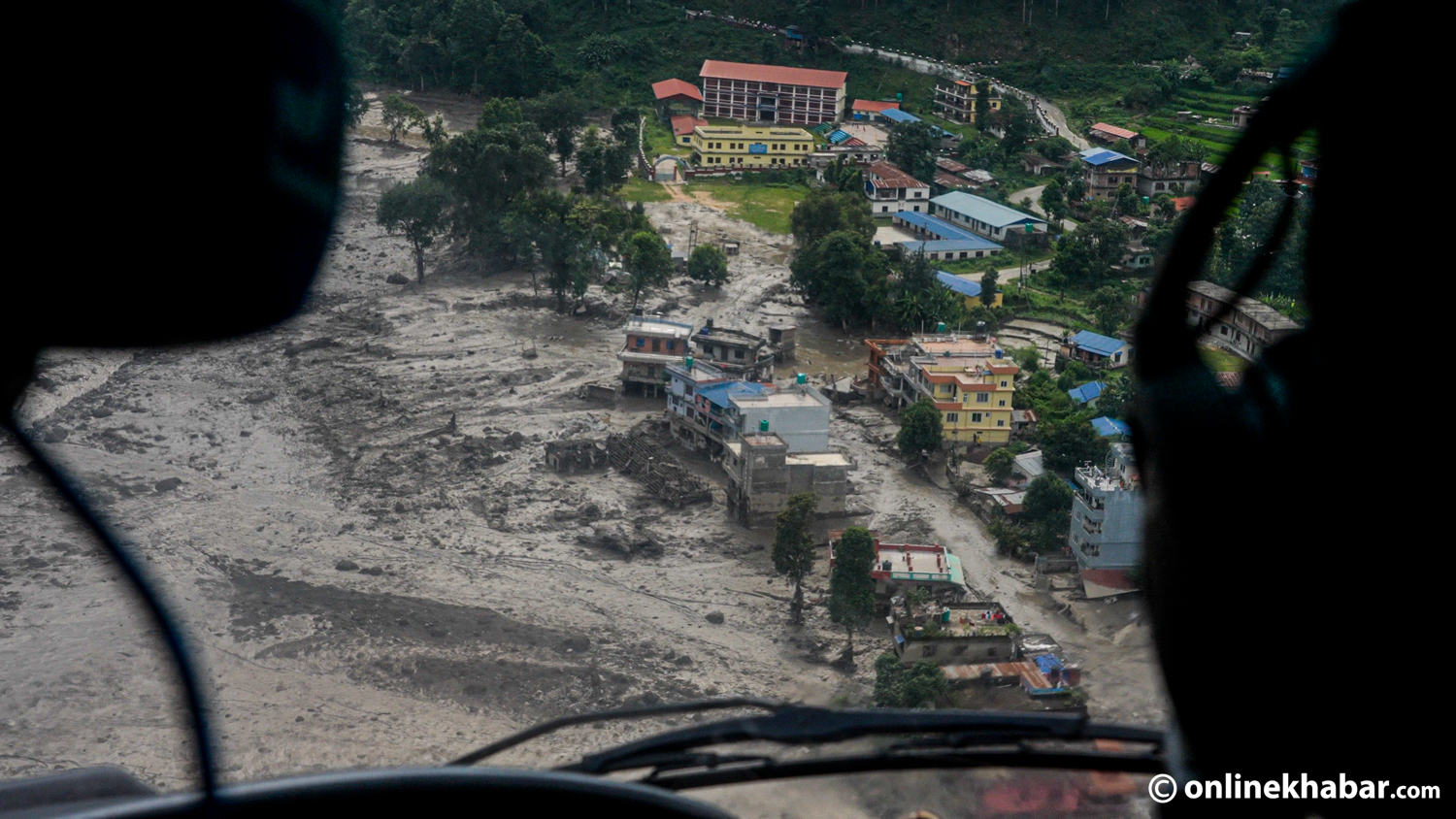
The report recommended scientific mapping, monitoring, and risk assessment of glaciers on both banks of the Bhote Koshi River and its tributaries.
For mitigation of possible Glacial Lake Outburst Floods (GLOFs) from high-risk glacial lakes, the report recommended long-term plans such as constructing drainage structures and surveillance equipment.
Conduct Climate Risk Assessments for Riverside Structures and Settlements
For long-term risk reduction, the report emphasized adopting policies mandating scientific climate risk assessments for any construction, planning, or settlements in riverside areas to mitigate potential hazards from climate change, glacial floods, and other natural disasters.
It also suggested that hydropower projects under construction or operation manage their waste material to ensure it does not elevate risk in other areas, consistent with their environmental impact assessments.
Assess Potential Risks at the Dry Port
The report proposed that efforts be made with the Chinese government to upgrade the northern commercial route along the Syafrubesi–Rasuwa road section, supported by Chinese assistance.
Additionally, it recommended analyzing the post-flood condition of the ongoing Rasuwa dry port construction area through detailed geotechnical and infrastructure studies to evaluate potential risks, advocating that reconstruction should proceed only based on those findings.
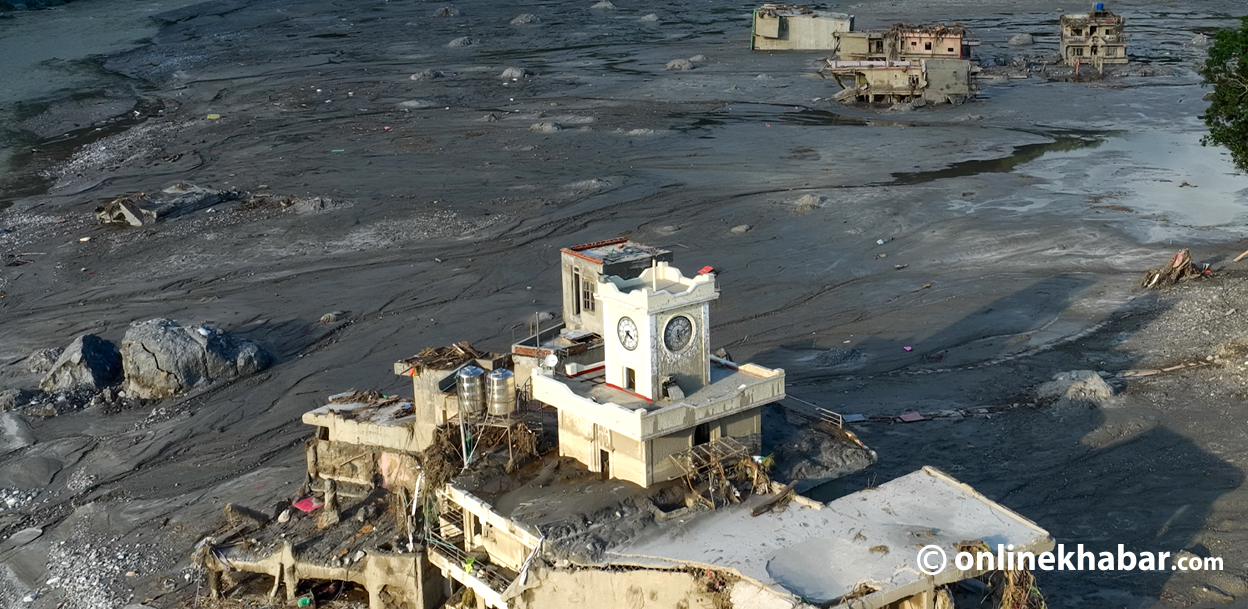
Implement Resettlement Plans from Timure to Betravati
The report suggested developing and implementing resettlement plans for settlements in Rasuwa destroyed by the recent flood.
It identified riverside settlements from Rasuwa Gadhi to Betravati, including Timure, Syafrubesi, Mailung, Pailebesi, Shantibazar, and Khalte, as highly vulnerable to flooding.
It urged conducting scientific studies to assess potential risks for these settlements and then prioritizing and implementing resettlement to safer locations.
Enhance Emergency Response Capabilities and Install Early Warning Systems Along Riverbanks
The government report following last year’s flood stressed capacity building among local administration, security agencies, subject matter offices, local governments, and communities for disaster management, equipping them with adequate resources.
It also recommended installing sirens in riverbank settlements and structures, establishing early warning systems through mobile messages and FM radios, and making disaster risk reduction policies mandatory in development plans.
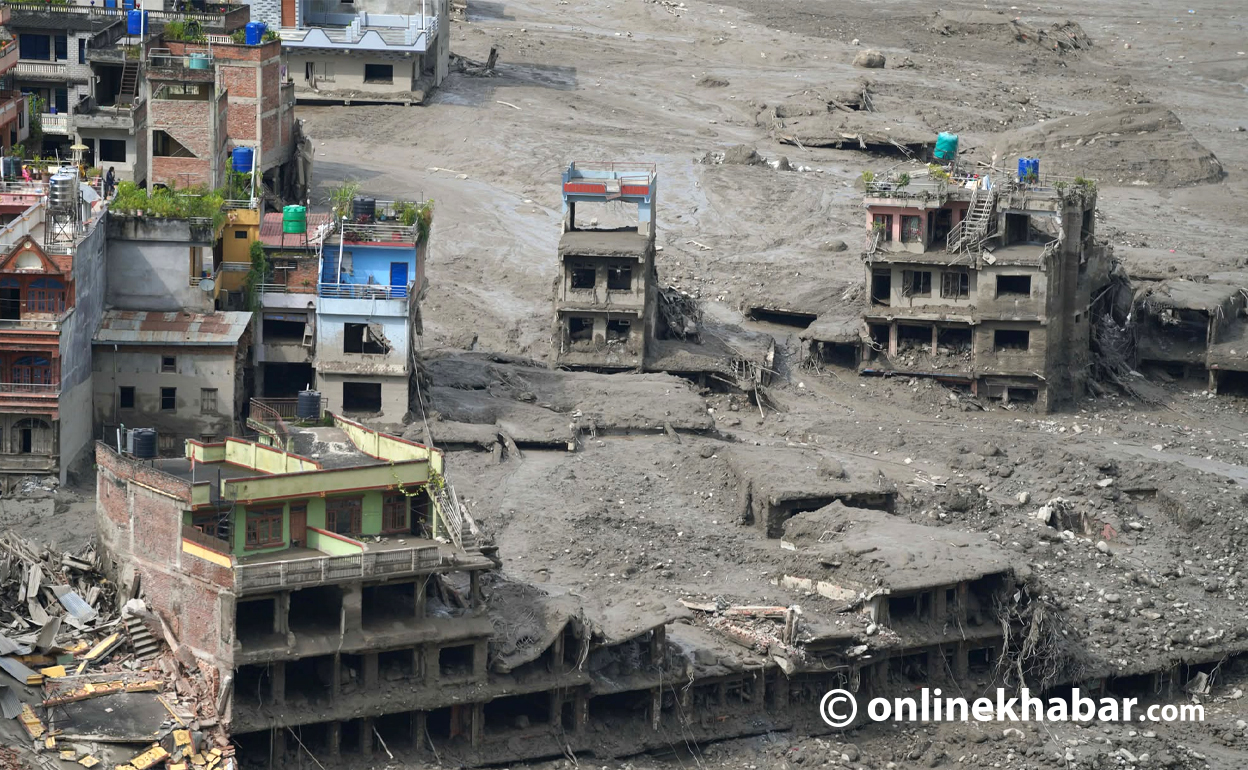
Additionally, the report recommended government support for flood, landslide, and glacial flood insurance targeted at small business owners and farmers.
Despite these detailed recommendations, the government’s own report was shelved for over a year. Instead of implementing these measures, continued structural developments and human activities proceeded around the river system—resulting in the recent catastrophic flood in the Bhote Koshi area.
The report, submitted to the government in Ashad last year, concluded: ‘If these recommendations were implemented promptly and with a long-term perspective, it would not only benefit the Rasuwa district but could establish a comprehensive disaster management system for the entire Himalayan region.’