
Is the Prime Minister’s Office Also Involved in Budget Drafting?
News Summary
Collected and editorially reviewed.
- Prime Minister Balendra Shah’s Secretariat has launched a portal to gather policy, program, and budget suggestions for the upcoming fiscal year 2083/84.
- The Ministry of Finance has adjusted its core budget drafting team by incorporating new secretaries to proceed with the work.
- Prime Minister Shah has engaged in budget-centered discussions with MPs from all seven provinces to seek suggestions, although pre-budget parliamentary discussions have been limited.
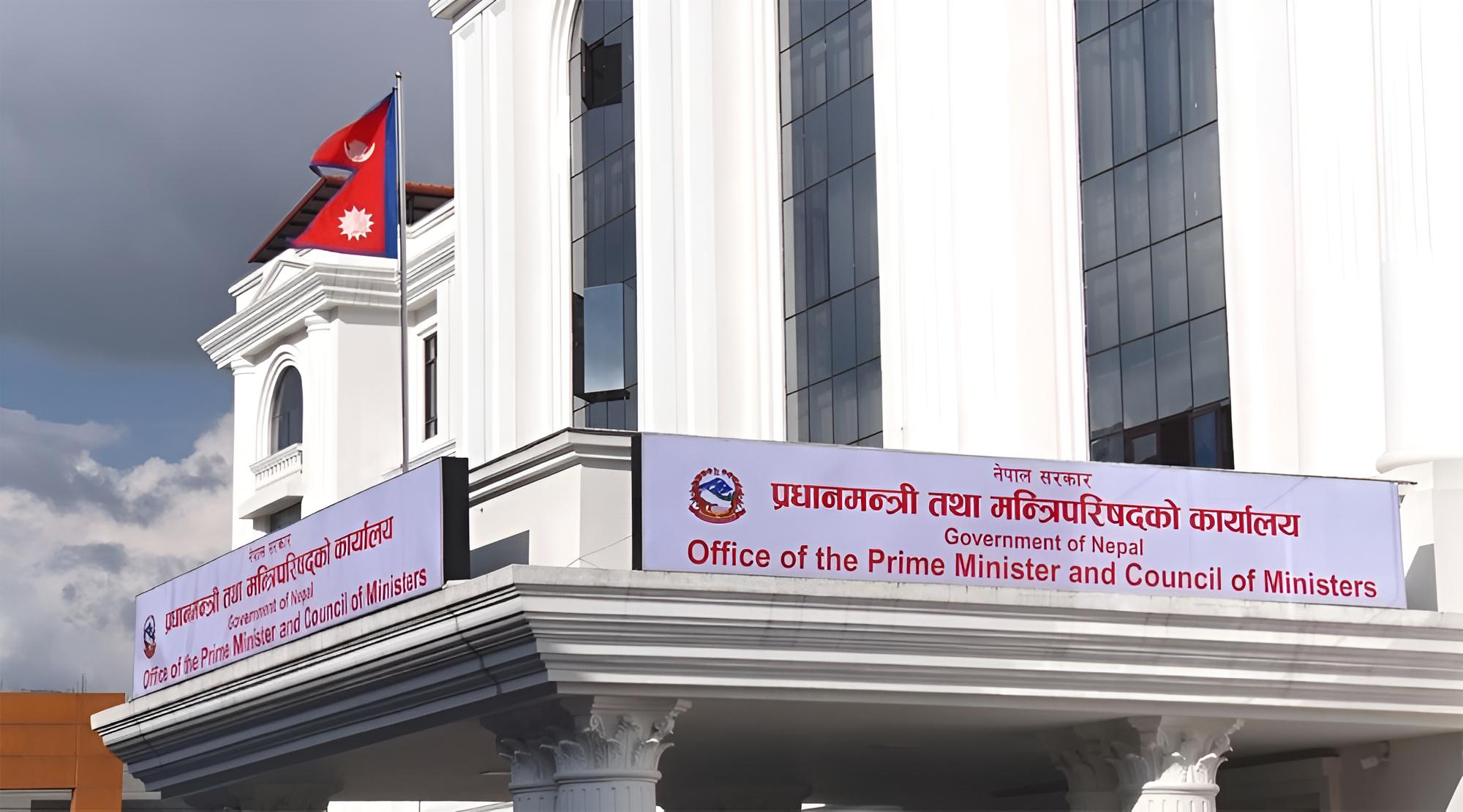
April 10, Kathmandu – On Saturday, the secretariat of Prime Minister Balendra Shah publicly shared a link to a portal established in the name of the Prime Minister and Council of Ministers’ Office.
Through this portal, the government is soliciting policy, program, and budget-related suggestions for the upcoming fiscal year 2083/84.
The portal, named “Government of Nepal, Prime Minister and Council of Ministers’ Office Suggestion Collection Portal,” states that it was launched to make the process of formulating budgets, policies, and programs transparent, effective, and participatory by incorporating the needs and expectations of the Nepali people.
The timing of the portal’s release is notable, as the drafting of the policy and program is nearly complete and is scheduled to be unveiled by President Ramchandra Paudel on Monday. Therefore, the likelihood of including public suggestions in the policy document appears limited.
Despite the weekend public holidays on Saturday and Sunday, there has been significant public participation on the portal. As of 4:30 pm on Sunday, a total of 6,705 suggestions had been submitted, including 3,305 related to policies and 2,245 related to budget matters. This indicates that the portal published by the Prime Minister’s Office is especially focused on gathering budget suggestions.
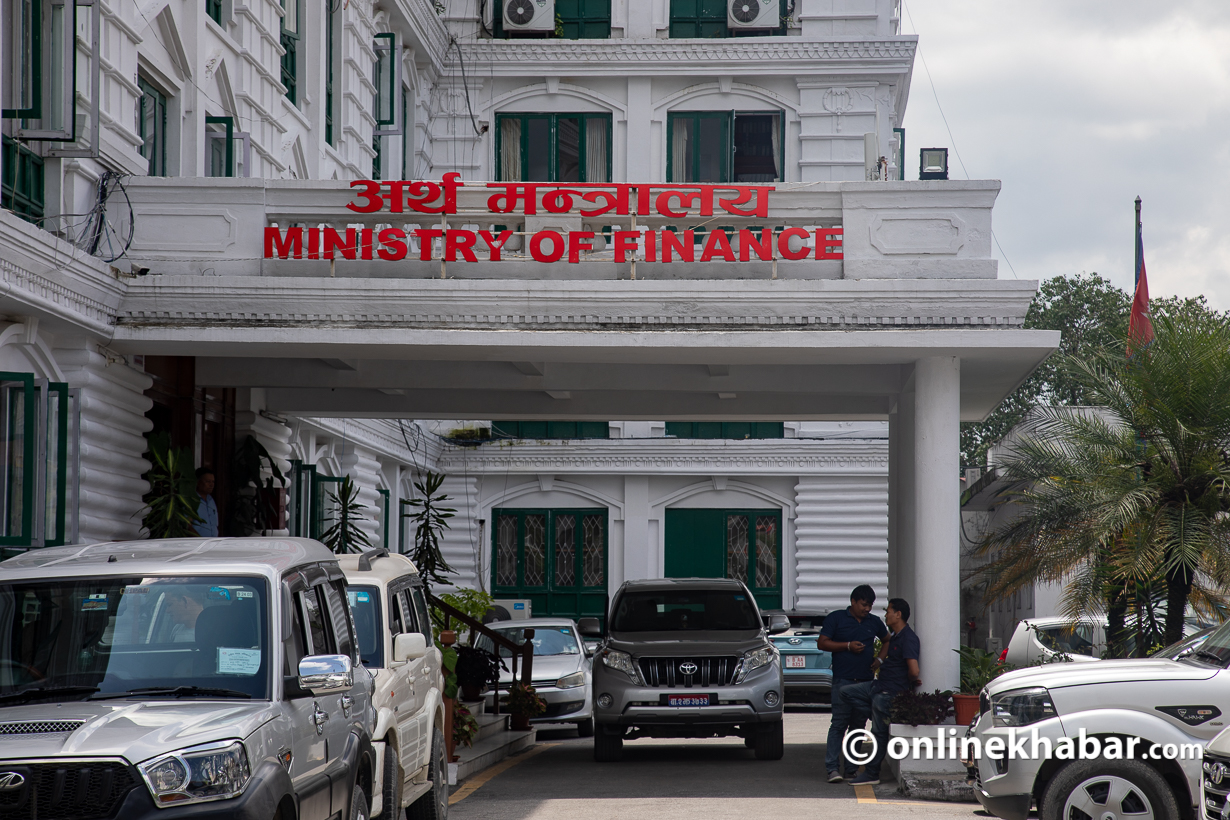
While the responsibility for drafting policies and programs lies with the Prime Minister and Council of Ministers’ Office, the convention is that the Ministry of Finance handles budget preparation, which is managed by a dedicated team appointed for budget drafting.
The Finance Minister typically participates directly in budget-related suggestion collection and pre-budget consultations with stakeholders. The current Finance Minister, Dr. Swarnim Wagle, is actively engaged in these activities.
Although in the past the government would ask citizens for budget suggestions, this process was limited to the Ministry of Finance. This time, the Prime Minister’s Office actively collecting budget-focused suggestions is unprecedented, signaling a more direct involvement of the Prime Minister’s Office in budget drafting.
Some officials within the Finance Ministry are reportedly unsettled by this new initiative. One official, who requested anonymity, stated, “The Ministry of Finance is still collecting suggestions from stakeholders. We became aware of the suggestions gathered by the Prime Minister’s Office only after their announcement. Possibly, these suggestions will be conveyed simultaneously to the Ministry of Finance.”
There has long been speculation within government circles that the Prime Minister’s Office carries out parallel budget preparation activities. However, since budget drafting has traditionally been centered solely within the Ministry of Finance, this notion was usually dismissed as mere rumor. Yet, with the Secretariat of the Prime Minister now soliciting budget suggestions, those suspicions have gained further credibility.
“Even if the Prime Minister’s Office does not write the budget speech, it appears quite active in many tasks such as planning projects, removing or adding items, and setting policy directions,” a related source commented.
According to sources close to the Finance Minister, even though the suggestion portal is publicized by the Prime Minister’s Office, the Finance Minister has access to review all incoming suggestions.
This source also emphasized that there is no doubt the entire budget drafting process is being led by the Finance Minister. “An excellent budget is underway under the leadership of the Minister,” the source affirmed.
They further noted that the government’s initiative to gather public suggestions from the leadership level should be understood as a new approach.
Changes in the Budget Drafting Team
About a month ago, the Ministry of Finance formed a core team for budget preparation, but there has since been a reshuffle. The Cabinet’s transfer of secretaries affected the core team members, prompting a reformation of the team to continue the work.
Previously, the secretaries Uttarkumar Khatri, Dr. Suman Dahal, Dr. Dhaniram Sharma, Mahesh Bhattarai, and Sevantak Pokharel were part of the budget drafting team. With Bhattarai and Pokharel being transferred to provincial assignments, the team was reconstructed by including secretaries Amrit Lamsal and Tank Prasad Pandey in their place.
A government official associated with the ministry said relocating core team members amid ongoing budget preparation deepens concerns about coordination gaps caused by “immature” decision-making.
Prime Minister Seeks Budget Suggestions from MPs
According to the constitution, the federal government must present the budget for the next fiscal year by Jestha 15 (late May). Budget preparation usually begins in Mangsir (mid-November). The Medium-Term Expenditure Framework and the National Revenue Estimation Committee finalize budget ceilings by the end of Magh (mid-February).
Formal budget drafting then begins. The National Planning Commission provides guidance on plans and resources to the Finance Minister by Falgun 7 (late February). In January, the Ministry of Finance issues instructions on budget ceilings and formulation to ministries and other agencies by Falgun 15 (end of February).
Simultaneously, the Revenue Committee continuously gathers recommendations related to revenue policies and rates. The Parliamentary Finance Committee organizes pre-budget discussions to collect budget suggestions.
This year, the scenario is somewhat different. Since the third week of Chaitra (mid-March), Prime Minister Shah has held budget-centered discussions in Singha Durbar with MPs representing all seven provinces. During these discussions, the Prime Minister solicited suggestions for inclusion in policies, programs, and the budget.
Based on these discussions, the government is focusing on implementing a 100-point agenda and building the upcoming budget accordingly. The Prime Minister’s Secretariat announced this initiative during the same time frame.
“It is natural for the Prime Minister to show interest and provide policy direction on the government’s budget. Therefore, the Secretariat likely conducted the suggestion collection. However, interpreting this as parallel budget drafting would be incorrect,” stated a senior official from the Ministry of Finance.
Pre-budget Discussions with MPs in Parliament Have Diminished
Previously, pre-budget discussions in Parliament were highly valued by representatives. However, this time, the largest parliamentary party and the government’s strong mandate have led to less emphasis on such discussions. The government has shortened these sessions and convened the budget session sooner.
Parliamentarians have also made fewer complaints, and ministers are currently holding group discussions with MPs from the Rastriya Swatantra Party.
Finance Minister Dr. Wagle, Minister of Physical Infrastructure and Transportation Sunil Lamsal, Minister of Tourism Khadga Raj Paudel, and Minister of Communication and Information Technology Dr. Bikram Timilsina, among others, have held pre-budget discussions with Rastriya Swatantra Party MPs.
During the government led by former Prime Minister Pushpa Kamal Dahal (Prachanda), in Falgun 2079 (February 2023), the Economic Procedures and Financial Accountability Act 2076 was amended to require pre-budget discussions in Parliament by Falgun (February/March) each year.
However, the KP Sharma Oli government later reversed this provision, reverting to the earlier rule that budget proposals must be presented at least 15 days before the budget is officially tabled. This practice is expected to continue this time as well.