
Ancestor Worship Held at Site of Massacre of Thousands of Shakyas After 2,570 Years
Kapilvastu district, rich in heritage, contains 136 archaeological sites, most of which are connected to the life of Siddhartha Gautama Buddha.
Gautama Buddha spent his childhood and youth in Tilaurakot, Kapilvastu, where the court of his father, King Suddhodana, was also located.
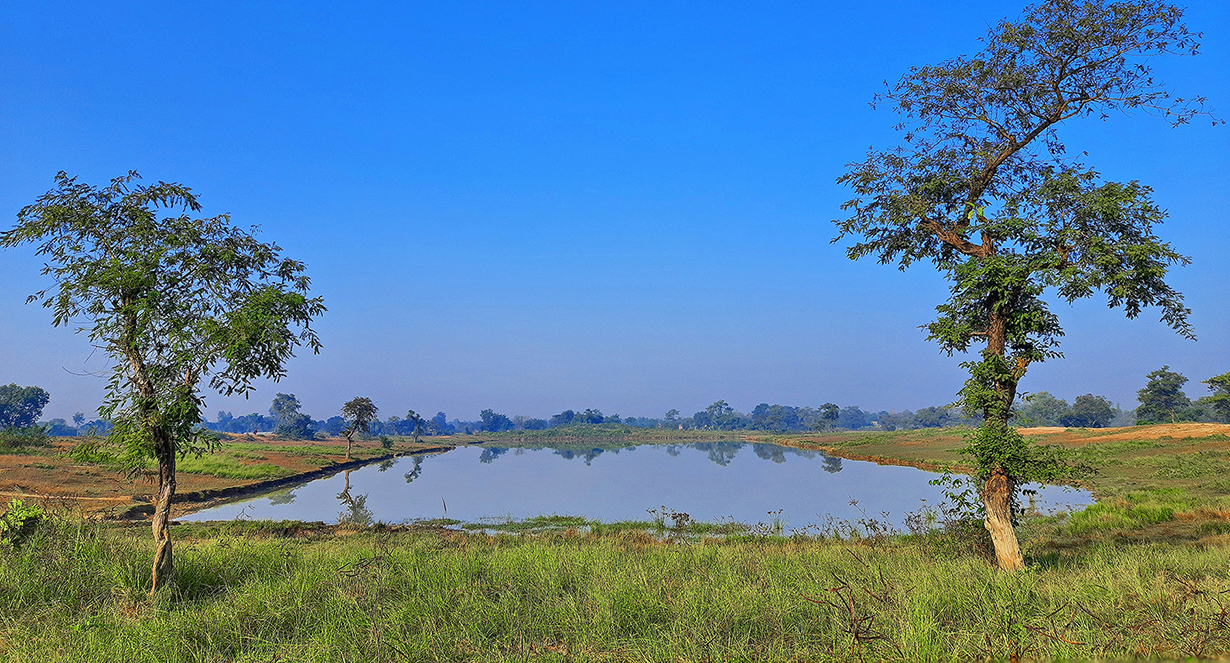
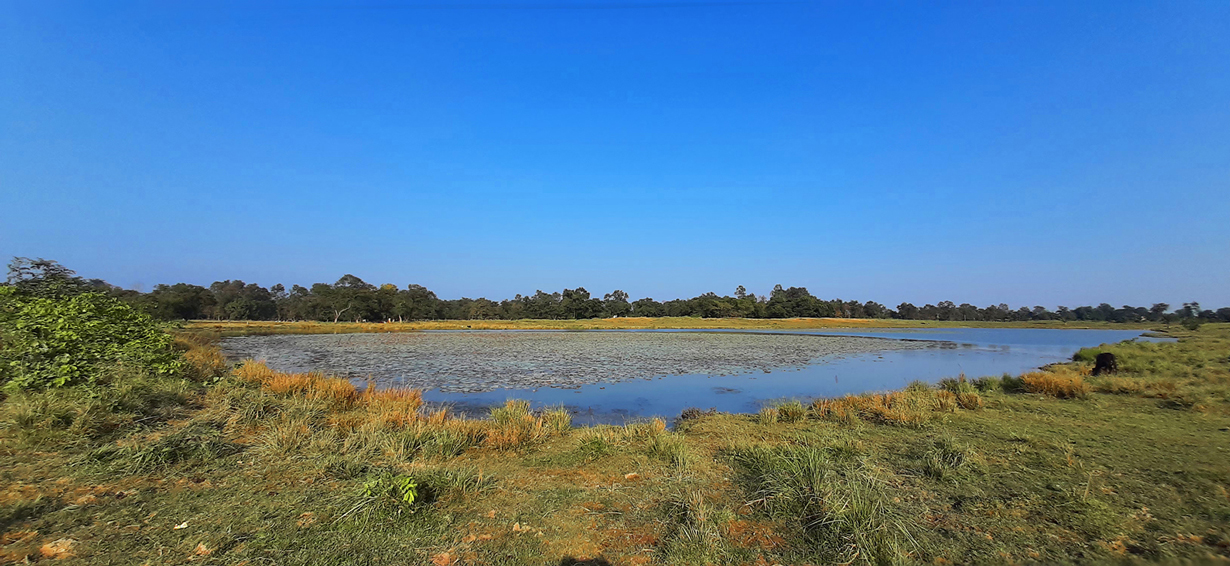
About 3 kilometers north lies the historic site of Sagarhawa, locally known as Lambusagar, which holds great significance in Buddhist history.
Birudddhaka, son of King Prasenajit of the Kosala kingdom, brutally massacred thousands of Shakyas, destroying the Shakya clan.
Why did Birudddhaka carry out such a large-scale massacre of the Shakyas?
At that time, the Shakya community was highly esteemed, and neighboring kings and monarchs sought to establish relations with the Shakya family.
When King Prasenajit of Kosala expressed his desire to marry a Shakya daughter, the Shakyas faced a religious dilemma. Prasenajit was highly powerful, and rejecting the proposal risked an attack on the Kapilvastu kingdom. This fear led the Shakyas to give their servant daughter Vasava Khattiya in marriage to King Prasenajit.
From King Prasenajit and Queen Vasava Khattiya, Birudddhaka was born. In his youth, Birudddhaka visited his maternal home in Kapilvastu.
When returning a few days later, Birudddhaka left his sword behind. He sent soldiers to retrieve it. The servants questioned the soldiers about the sword’s location, which was wrapped in milk and cow dung.
The servants did not realize these were Birudddhaka’s soldiers. When told that the place had been purified by Birudddhaka, since the daughter of a servant was involved, the soldiers informed Birudddhaka of this.
Feeling deeply insulted, Birudddhaka vowed, “The place washed by milk will one day be washed by the blood of the Shakyas.”
After the death of his father, King Prasenajit, Birudddhaka became king of Kosala. He attempted to attack Kapilvastu three times but failed due to Gautama Buddha’s mediation.
On his fourth attempt, Birudddhaka launched a ferocious attack, massacring thousands of Shakyas, as recorded in Pali historical texts.
Many Shakyas were scattered in battle; after Kosala forces entered the city, the remaining Shakyas were also killed. Birudddhaka fulfilled his vow by turning the place washed with milk into one soaked in Shakya blood.
The bodies of the Shakyas were buried at Sagarhawa, marking this ancient site as profoundly sacred in Buddhism.
The Sagarhawa site was discovered in 1897 by Dr. Fuhrer and Khad Gashmesher. Seventeen stupas were uncovered there. An ancient lake measuring 1,059 feet in length and 225 feet in width was also found in the Sagarhawa area.
Since excavations have not continued, the exact location of all stupas remains uncertain. These 17 stupas are believed to be in memory of the Shakyas killed in the massacre, and the Shakya community regards the area as their ancestral land.
Chinese traveler Dr. A.K. Fuhrer performed the first excavation at Sagarhawa from December 1897 to March 1898, documented in historical records.
Following Fuhrer, Indian archaeologist P.C. Mukherjee conducted further studies and, in 1899, depicted a brick stupa in paintings from the site. Excavations yielded relics, gold, silver pieces, and precious stones.
In 1962, Indian archaeologist Devla Mishra conducted additional studies in the area, noting that earlier research by Fuhrer and Mukherjee was incomplete.
Beyond the main stupa, hundreds of small stupas are believed to exist northwest of the Sagarhawa pond, possibly constructed later in remembrance of the Shakyas.
Fuhrer referred to the site as the “massacre site,” a term also mentioned by Chinese traveler Yüan Chao during his 7th-century visit. A 2016 geological survey identified large clay and brick structures beneath the ground.
The survey confirmed the presence of numerous buildings, platforms, and stupas, demonstrating the site’s historic religious significance.
Another survey in 2018 revealed many historical structures surrounding the pond. No excavations have taken place since 1899.
Further development of this historical site is imperative, as it is tied to the Shakya clan and the birthplace of Gautama Buddha.
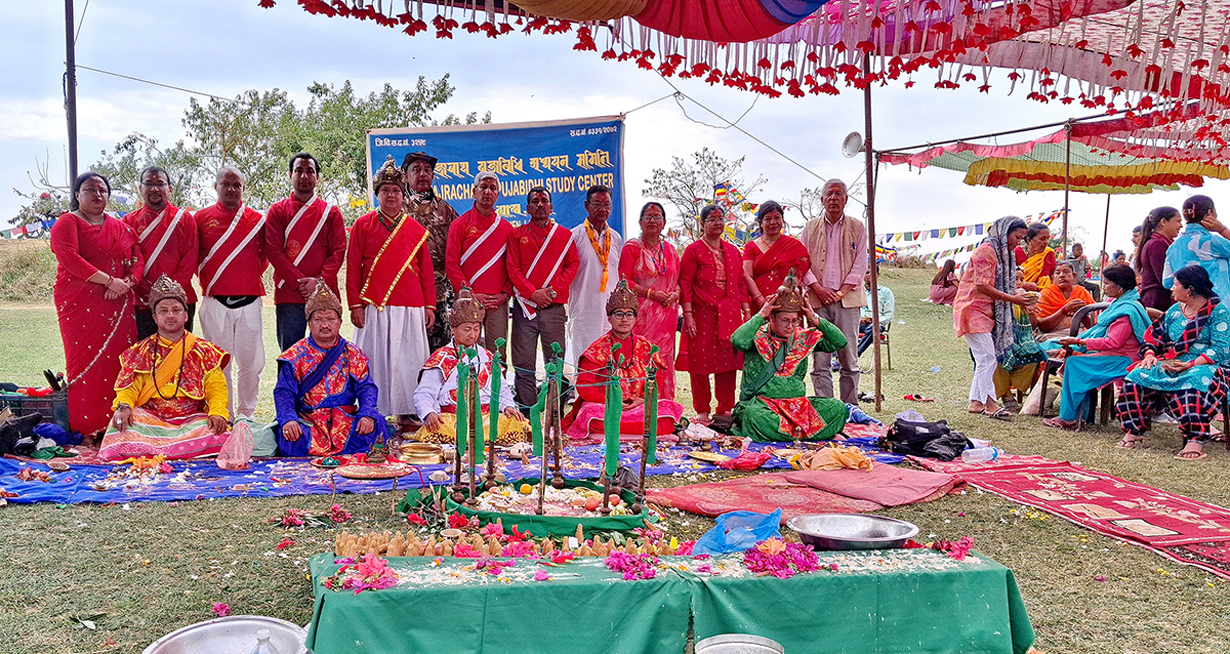
In memory of the Shakyas massacred here, the first-ever ancestor worship ceremony was held at Sagarhawa on Chaitra 1 (mid-March) this year.
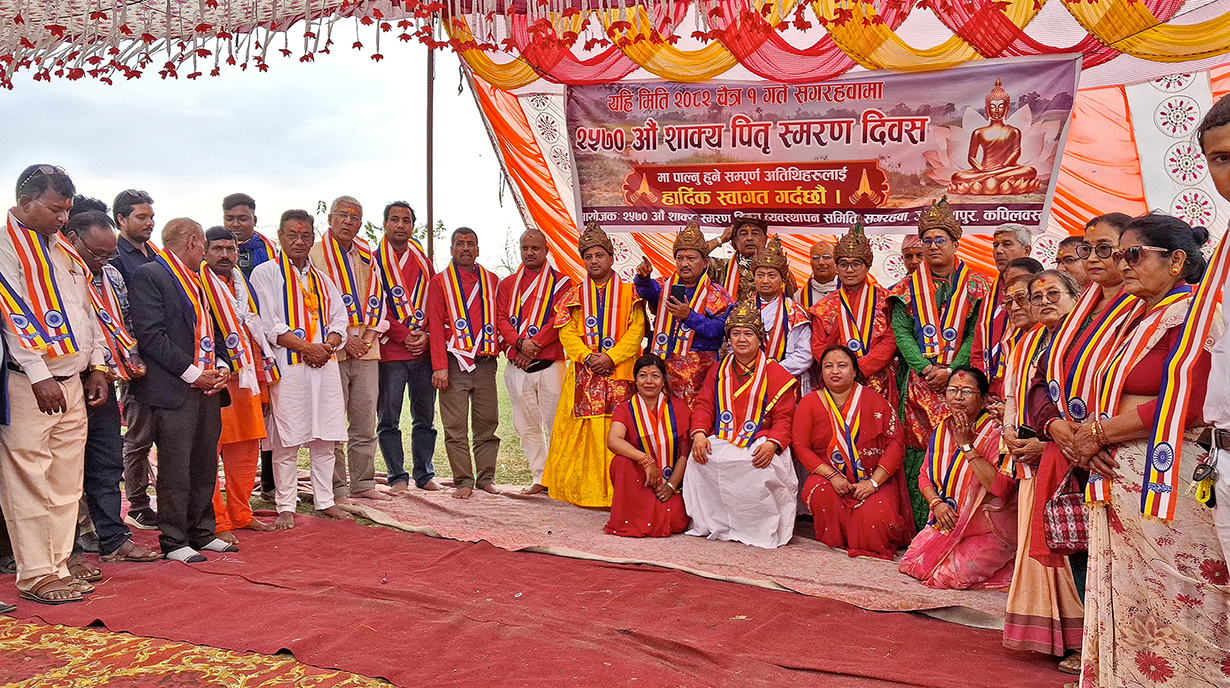
The 10 Shakya Memorial Ancestor Management Committee was formed under the leadership of Lalil Gurud, chairman of the Jagadishpur Management Multistakeholder Forum. Priests from Patan Golden Bihar were invited to conduct approximately four hours of ancestor worship.
Shakyas residing in Kathmandu, Pokhara, Palpa, Butwal, Bhairahawa, Nepalgunj, and Taulihawa participated in the ceremony.
This marks the first ancestor worship held at the site where the Shakya clan was massacred, after 2,570 years. Going forward, March 15 each year (Chaitra 1) will be observed as Shakya Ancestor Remembrance Day at Sagarhawa.