
Government Assures Settlement Removal Only After Proper Management; Squatters Remain Unconvinced
News Summary
- Urban Development Minister Sunil Lamsal stated that settlements would not be cleared until squatters’ identification and proper arrangements are finalized, though bulldozers have already demolished settlements in Kathmandu.
- The Ministry of Home Affairs has directed district administrations to identify encroached land and only remove encroachments after proper management is ensured.
- According to the Land Problem Resolution Commission, there are 1,209,545 landless Dalits and squatters nationwide, with documentation and verification to be completed by 26 May.
18 April, Kathmandu – Urban Development Minister Sunil Lamsal declared on Thursday that the eviction process of remaining squatters will not proceed until their identification and a proper management framework have been formulated. However, those without land remain unconvinced.
“My house was demolished by the government the day after they said they wouldn’t,” said Pawan Gurung, a resident of the Shankhamul squatter settlement. “I felt reassured when they promised eviction would only happen after identifying squatters and proper management, but this afternoon when my house was demolished, I was nearly unconscious.”
After bulldozers razed his home, Gurung sought shelter at the Electricity Training Center in Kharipati, Bhaktapur. He is also the vice chairman of the United National Squatters’ Front.
Having registered his name at Dashrath Rangashala and returned, he said, “We had lived in that house for 53 years, and we requested proper arrangements before demolition, but no one listened to us. Watching my home demolished right before my eyes, even at this age when I receive senior citizens’ allowance, I couldn’t hold back my tears.”
On Friday afternoon, when journalists visited Shankhamul, Bal Krishna Humagai’s youngest daughter was quietly looking at their empty house. She attends class six at the nearby community school and was carrying a backpack full of books.

Bal Krishna’s wife held a white dog in her hands. Having received the eviction notice only 18 hours earlier, she was coaxing the dog to follow her as she left their belongings behind.
Addressing his wife, Bal Krishna said, “We can at least love the dog. But we are human! This eviction without proper arrangements is unacceptable.”
After reading on Facebook that the government would arrange proper management first, he took a rental vehicle to Manthali, Ramechhap, on Thursday evening. Upon his wife’s phone call saying the municipality had made announcements, he quickly returned home on public transport.
When Bal Krishna returned, their house—home to him and his family for six years—was completely vacated. The roofs and windows were gone, with only bulldozers pending to demolish the remaining structure.
“My parents bought this house in 1976 for five thousand rupees. They lived here. Along with four grandchildren, a family of nine resided here,” he said.
After registering as a squatter at Dashrath Rangashala, he was informed he would be called to the holding center tomorrow. He plans to pitch a tent near his ruined home and stay there overnight. On Friday night, he was found near a temple with his family, while his daughter stayed inside the temple.
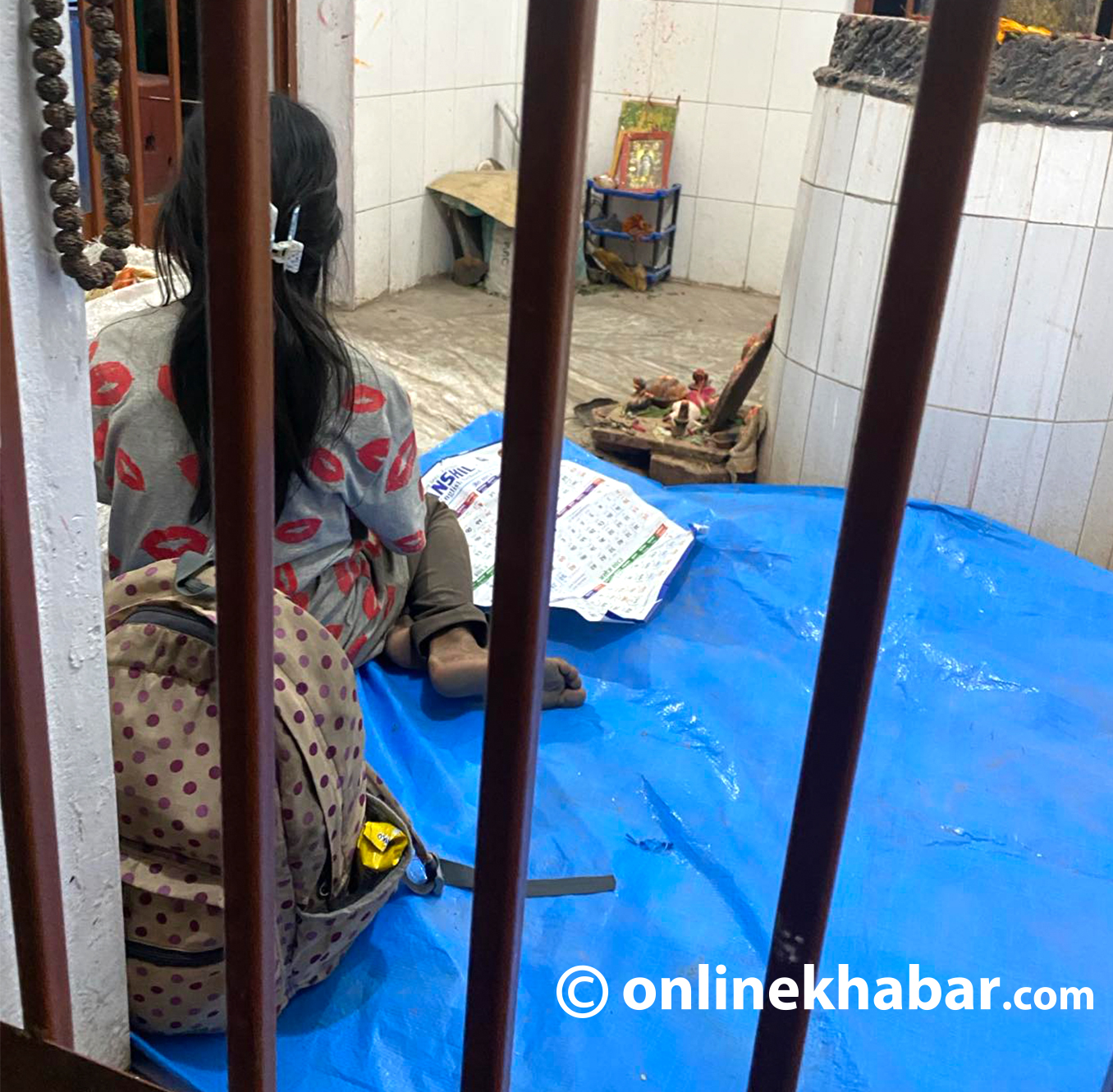
Had the government conducted the documentation, verification, and preparation before the bulldozers arrived, families like Bal Krishna’s would not have had to sleep in tents after their homes were demolished.
Urban Development Minister Sunil Lamsal, who also chairs the Central Coordination Committee responsible for managing eviction of encroached settlements, clarified that only settlements along riverbanks with high flood risk during the rainy season have been cleared from a humanitarian perspective.
On the same day Minister Lamsal expressed his views, the Ministry of Home Affairs sent letters to all 77 district administrations instructing them to identify encroached government and public land, request eviction plans from relevant agencies, forward them to the ministry, and only proceed with eviction after ministry approval and appropriate security and arrangements.
Ministry of Home Affairs spokesperson Anand Kafle said the directive aims for a planned and systematic eviction process.
On Thursday, the Ministry of Federal Affairs and General Administration also issued letters to all 753 local governments to identify squatters, plan immediate alternative arrangements, and seek assistance from district administrations if necessary.
While stakeholders have welcomed the ministries’ proactive steps toward documentation, squatters remain uneasy. United National Squatters’ Front Chairman Kumar Karki revealed their anxiety after eviction notices surfaced for settlements outside Kathmandu, such as Dang and Biratnagar.
After the Nepali Army and Nepal Police conducted squatter data collection, harsh criticism followed. “The ministry’s directive isn’t just because of criticism over army-police data collection; if the work is genuinely done only after proper arrangements, that’s a positive development,” Karki said.
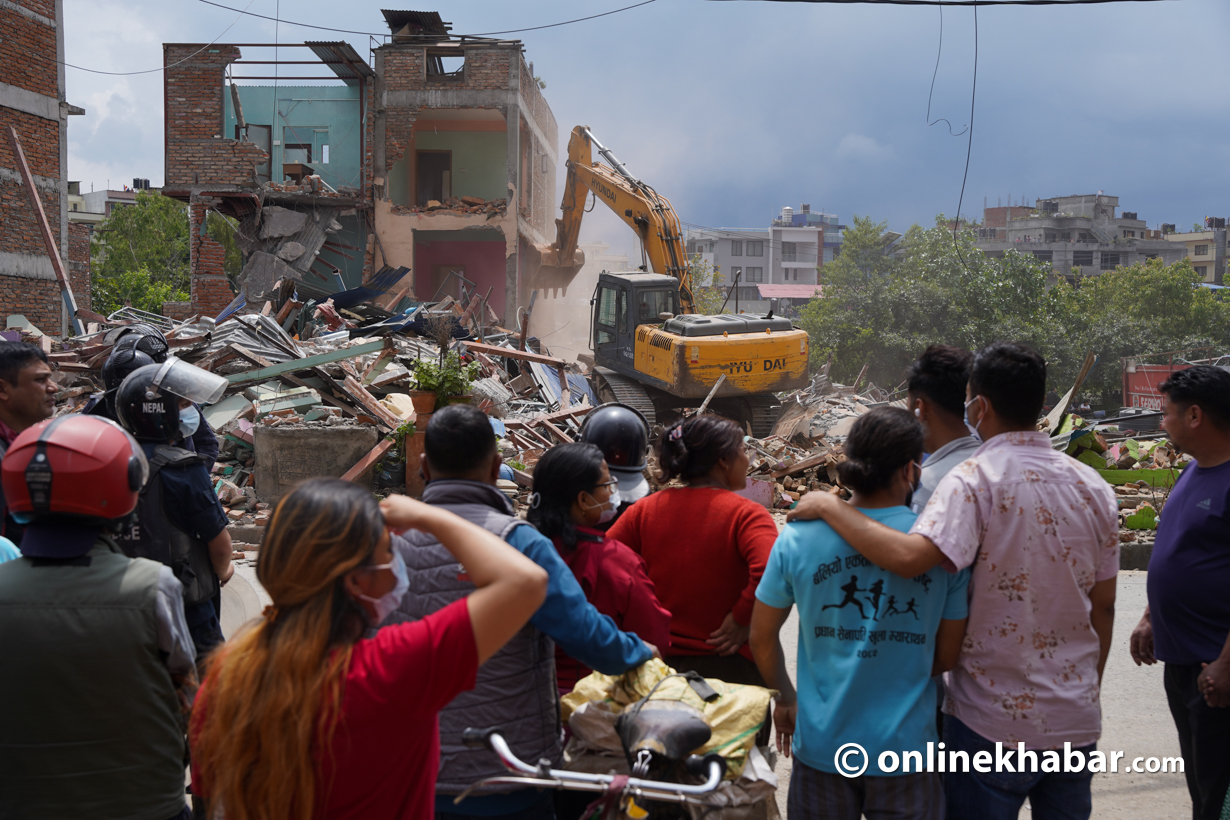
On 16 April, the Kathmandu District Administration Office issued a notice for settlement removal. Following this, bulldozers were deployed from Friday onwards at settlements in Balkhu, Banshighat, and Shankhamul.
Assistant Chief District Officer of Kathmandu, Muktiram Rizal, stated no new instructions have been issued beyond the 16 April notice. “We are working based on that notice; I am unaware if any additional directives have been received,” he said.
After relocating people from the settlements to temporary shelters, the Kathmandu Metropolitan City is responsible for providing food, refreshments, and water at those locations. Kathmandu Metropolitan City’s chief is also a member of the Central Coordination Committee charged with managing the eviction of encroached settlements.
Spokesperson for Kathmandu Metropolitan City, Naveen Manandhar, said he was unaware of any new decisions about eviction. He affirmed that the city is fulfilling its responsibilities as directed by the Central Coordination Committee.
According to the 100-point agenda approved by the government on 27 March, documentation and verification of landless persons nationwide must be completed by 26 May.
The Land Problem Resolution Commission notes that there are 1,209,545 landless Dalits, squatters, and informal settlers across the country, including 98,502 landless Dalits and 180,293 landless squatters.
Chairman Karki of the Squatters’ Front recommends that the government at least identify genuine landless Dalits and squatters before undertaking any further actions. “Had the government’s stance been clearer, it would have been easier to respond to concerned parties nationwide,” he said.